 News
News6 April 2023
Disaster Preventive Parks - Living with Nature in Tōhoku - Written by Eleni Mente, Small Grant Recipient
Categorised under: Grants
The Great East Japan Earthquake and Tsunami that hit the Tōhoku area in March 2011 was a natural disaster that stayed in the headlines around the world for days. What became known as ‘3/11’ was the most powerful earthquake ever recorded in Japan, and directly affected four prefectures: Aomori, Iwate, Miyagi and Fukushima. The ensuing meltdowns at the Fukushima Daiichi Nuclear Power Plant added to the catastrophic power of nature in devastating the area. Shocking images of the disaster travelled around the world. Reconstruction of the coastal areas affected by the tsunami began immediately, and each of the affected prefectures was asked to submit an application to the central government for funding. Even though sea walls had failed to protect the coast of the Tōhoku area, the main approach to post-tsunami recovery was to reinforce existing flood defence schemes. Miyagi Prefecture, however, took a different route, implementing nature-based solutions to restore natural ecosystems and prevent future flooding. Green embankments were built behind flood defence walls, and areas of surviving pine trees were redesigned to create a new, denser area of planting, creating a ‘Forest Wall’. The “森 の” (“Morino”) or “Of the forest” project was thus launched, with the support of non-profit organisations such as Pur, Oiska and Donguri-Mongori.
I am a landscape architect, so Miyagi Prefecture’s approach caught my attention and triggered my curiosity. In September 2021, following my application for funding, I received a Small Grant from the Daiwa Anglo-Japanese Foundation to support a visit to the Tōhoku area to study the Great Forest Wall. The ‘natural sea wall’ created by re-greening the coast in the devastated areas was supported by local authorities and implemented through volunteer work by local communities. My interest in this unconventional approach was added to when I heard about Iwanuma City’s aspiration to create the Millennium Hope Hills project, a vision of placemaking along the coast. The world-famous botanist Professor Akira Miyawaki was involved, offering his expertise and knowledge of disaster prevention methods, which he has implemented in many projects in Japan and abroad. The ‘Miyawaki method’ is known to be amongst the most interesting and sustainable concepts related to tree planting, and Miyawaki’s theories about Potential Natural Vegetation and the planting of forests of native trees have been put into practice in many areas affected by natural disasters, such as in Java in Indonesia and the Great Green Wall in China. Based on years of observation of areas affected by natural disasters, Miyawaki found that indigenous tree species, in all cases, survived the catastrophic power of nature and managed quickly to regenerate and re-establish themselves.
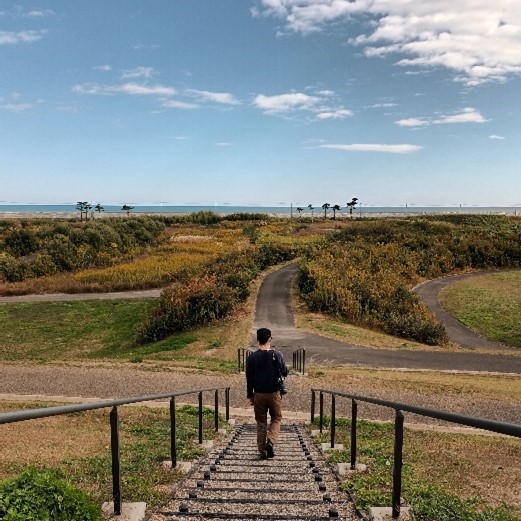
Millennium Hope Hills, Kabasaki park hill, overlooking the new planting, paths and the surviving pine trees
I spent many days travelling along the Pacific coast in Tōhoku, from Hachinohe to Sendai, trying to gain a broader understanding of the different post-tsunami reconstruction methods. The topography of each area, the local communities (especially the strong voice of the fishing communities) and political decisions defined the way the disaster was mitigated. In Aomori, the mountainous landscapes offer protection for villages and towns, so a defensive wall wasn’t needed. But in various places there are disaster preventive parks, such as Tatehana Park, and evacuation points. In Iwate, the zone most affected by the tsunami, existing walls were raised and reinforced to improve the safety of residential areas. Moreover, new homes were positioned on the mountainsides, away from the coast. Even though the connection to the ocean is vital for fishing communities, they compromised in order to secure a safer future for their homes and families.
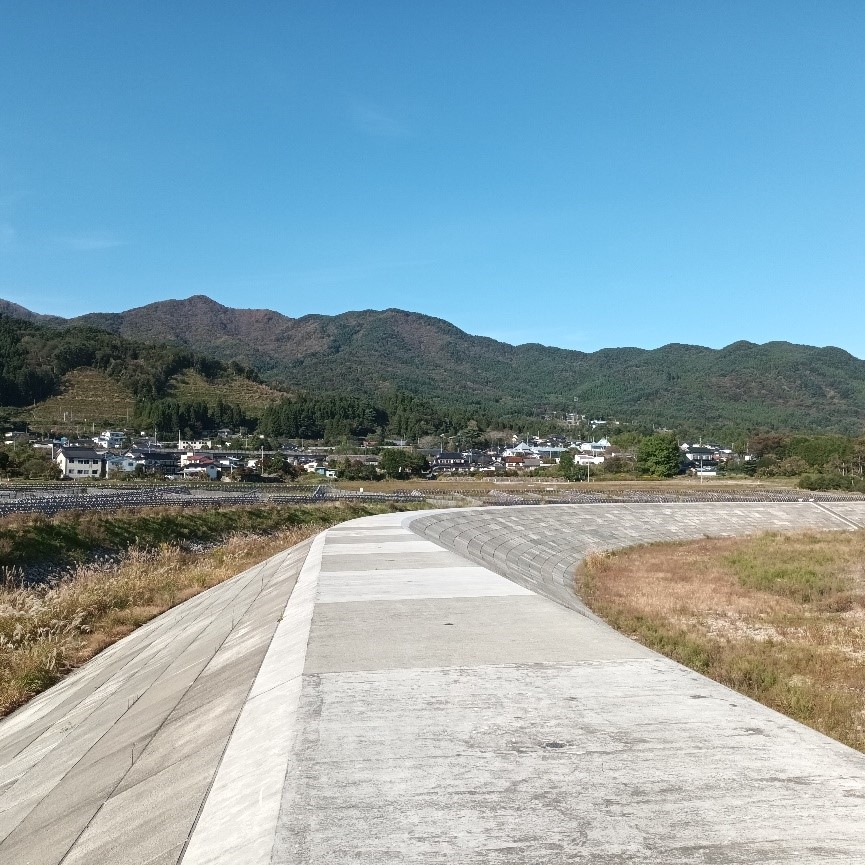
The higher seawall in the Ofunato area, Iwate
Approaching Miyagi Prefecture, the coastal scenery changes. Long stretches of dense pine plantations form the ‘Forest Wall’ for many kilometres. They are situated behind existing concrete sea walls, creating an additional layer of protection to reduce the speed of the flow of water in future tsunamis. In addition to the pine planting, a three-metre green coastal embankment of 21 different native species is an added layer which offers protection but, at the same time, has a high ecological value, follows the principles of adaptive planning, and celebrates the concept of ‘placemaking’. This is an approach to planning which capitalizes on local assets in order to promote residents’ health and well-being.
Under the guidance of Professor Miyawaki, some of the tree species chosen were the ‘itajii’, the ‘tabunoki’ , the ‘shirakashi’ and the broad-leaved laurel, all Japanese evergreen trees.
Millennium Hope Hills, Ainokama park; existing seawall and the long stretch of new planting behind
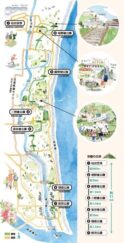
The Millennium Hope Hills parks
I visited sections of Millennium Hope Hills, an area which was declared uninhabitable and has since been transformed into a 10km amenity greenspace consisting of six parks and fourteen evacuation hills created from soil and debris from the disaster. It also includes pedestrian and cycle routes.
In an attempt to shed light on the design and construction process and gather feedback, my project partner in Japan – Yuhei Nakajima, a landscape architect based in the Nagano area – and I interviewed staff and the Head of Construction at Iwanuma City, community representatives and the founder of the Donguri-Mongori company, who helped set up the process of planting. We also undertook questionnaire-based research in order to collect additional information from the local community.
Ninokura Park on planting day, with founder and members of Donguri-Mongori and the Head of Construction, Iwanuma City
In contrast to the technical installations and mechanisms aimed at increasing the height of existing concrete walls, the Forest Wall has a powerful, symbolic meaning for local communities. Furthermore, it became an act of hope, re-birth, and community empowerment, and emphasised the importance of living with nature and not in opposition to it, a principle deeply rooted in Japanese culture. Volunteers from all over Japan, from abroad and also from local communities united with a common purpose; to bring their homes back to life, re-discover their sense of place, and create memorials for the people who didn’t survive the disaster. It also celebrates their connection to the sea, as the new parks, hills and pedestrian routes allow for open views of the ocean, in contrast to the higher walls built elsewhere. It is an impressive initiative (approximately 34,000 volunteers took part) as well as a highly valuable ecological addition to the area (300,000 newly planted trees). The upkeep of these areas, however, is time-consuming, and huge amounts of effort are required from the volunteers to sustain a thriving green embankment. At the same time, some parks are less accessible and, therefore, less used by residents. The Miyawaki method has been treated with scepticism by many ecologists who question the success of the Forest Wall and support the view that nature should be allowed to take control, leaving the area to grow wild.
Research indicates that 70% of cities worldwide are already dealing with the consequences of climate change. Rising sea levels and increasingly frequent extreme climate-related events such as typhoons, torrential rains and droughts, are phenomena threatening many areas of the world. Millions of people are at risk of flooding in the UK, both in urban and rural areas. My trip to Tōhoku opened my eyes to the experience of living with disasters and showed me that building with nature is not a utopia, and that landscape-led placemaking can play a key role in community empowerment and creating more resilient places. Looking forward, I would like to offer my knowledge to implement these principles in the UK and to design spaces which will adapt and overcome the challenges of future natural disasters, while becoming better and safer places to live.

This piece was written by Eleni Mente.
Eleni is a Landscape Architect and founder of the company Element, with an interest in nature-based solutions to tackle climate change and prevent natural disasters. She spent October-November 2022 in the Tōhoku area as a Daiwa Foundation Small Grant recipient.