Events category: Exhibition

9 March 2023

Private View and Artist Talk: AKI INOMATA in conversation with Dr Lena Fritsch

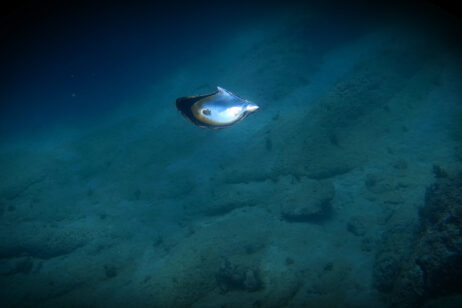
This event provided the opportunity to have a first look at the work of AKI INOMATA and hear her discuss with Dr Lena Fritsch the ideas and inspiration behind her work. The show will centre around one of INOMATA’s most recent projects, Memory of Currency (2018-2021) and introduce her practice, which for many years has involved collaboration with non-human creatures such as hermit crabs, bagworms, octopuses and ammonites. Memory of Currency is a project in which INOMATA collaborated with pearl oysters to create currency ‘fossils’. INOMATA implanted artificial nuclei into the tissues of the pearl oysters, with the shape of each nucleus modelled on the portrait of a figure depicted on one of today’s major currencies.

10 March 2023

Autobiographical Animals by AKI INOMATA

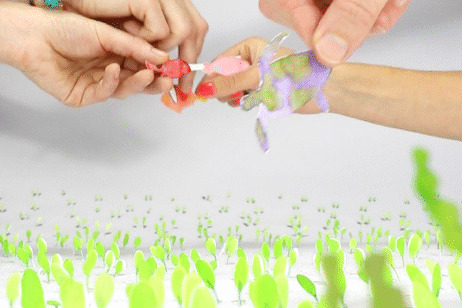
The Daiwa Anglo-Japanese Foundation is pleased to present AKI INOMATA’s first UK solo exhibition Autobiographical Animals. The show will centre around one of INOMATA’s most recent projects, Memory of Currency (2018-2021) and introduce her practice, which for many years has involved collaboration with non-human creatures such as hermit crabs, bagworms, octopuses and ammonites. Memory of Currency is a project in which INOMATA collaborated with pearl oysters to create currency ‘fossils’. INOMATA implanted artificial nuclei into the tissues of the pearl oysters, with the shape of each nucleus modelled on the portrait of a figure depicted on one of today’s major currencies.
6 October 2022

La Mer by Yuken Teruya

The Daiwa Anglo-Japanese Foundation is pleased to showcase Yuken Teruya’s first UK show, marking the 50th year of Okinawa’s reversion to Japan after the American occupation. Yuken Teruya is one of the most prolific Okinawan artists of his generation. His work is known for using humble objects – cardboard, paper bags, newspapers, board games, balloons – in ways that echo Okinawa’s historical narrative. It explores the ongoing psychological and political impact of power relationships and their effects on the natural world. In doing so, it attempts to disentangle individual memories from dominant narratives, leading us to critical understandings of our current situation. His works have delved into today’s critical thinking and discourses on democracy, identity, the US military presence, war, violence and ongoing issues related to colonialism. His voice is unique in Japan, yet resonates with audiences beyond. 

12 October 2022

Thinking out loud by Linda Havenstein

Linda Havenstein is an interdisciplinary artist whose work deals with language, signs and symbols, and how they shape our perceptions of reality. Starting with moving images, she works with installations, sculpture, painting and virtual contents, combining analogue and digital aspects in the same artworks. Her recent focus is on the use of code and encryption in order to distort and change notions of meaning, as well as applying new forms of decryption and decoding to establish new interpretations. In her talk, Havenstein introduced her artistic practice and the approaches she developed while staying in Okinawa and Korea, as well as her collaborative practice with Yuken Teruya.

6 October 2022

Private View: La Mer by Yuken Teruya

The Daiwa Anglo-Japanese Foundation is pleased to showcase Yuken Teruya’s first UK show, marking the 50th year of Okinawa’s reversion to Japan after the American occupation. Teruya is fascinated by human perceptions of the ever-changing moment. For him, the modest practice of drawing is a mighty tool not only to observe hierarchies, but to rebalance them. Teruya’s work utilises temporary, fragile materials: his cut-out pieces can be described as expanded drawings, but also as delicate sculptures. The sea is a constant presence in the Okinawan landscape and a recurring theme in Teruya’s work. The exhibition La Mer encapsulates Teruya’s perspective: historic and present references to the Okinawan condition, ecological systems within material cultures, and power relationships between countries.

20 July 2022

HIROSHIMA by Iri Maruki and Toshiko Akamatsu

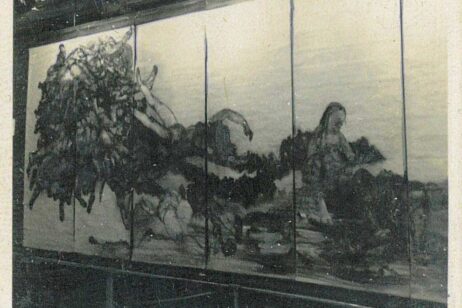
From 1950 to 1982 Iri Maruki and Toshiko Akamatsu (also known as Toshi Maruki) created the Genbaku no Zu series of artworks, internationally known as the Hiroshima Panels. The works became an apparatus to convey the story of the atomic bombing of Hiroshima and Nagasaki to the general public, first during a period of censorship, then during protests against nuclear weapons by the artists and their supporters. Amidst a mood of fear and anger towards the Cold War, almost 20 countries invited the works to be exhibited in a gesture of peace and transnational solidarity. As we potentially enter an era of escalating nuclear rhetoric, the Daiwa Anglo-Japanese Foundation showcases the panels’ drawings and exhibition archives in an opportunity to reflect on the consequences of nuclear warfare.

19 July 2022

Private View: HIROSHIMA by Iri Maruki and Toshiko Akamatsu

From 1950 to 1982 Iri Maruki and Toshiko Akamatsu (also known as Toshi Maruki) created the Genbaku no Zu series of artworks, internationally known as the Hiroshima Panels. The works became an apparatus to convey the story of the atomic bombing of Hiroshima and Nagasaki to the general public, first during a period of censorship, then during protests against nuclear weapons by the artists and their supporters. Amidst a mood of fear and anger towards the Cold War, almost 20 countries invited the works to be exhibited in a gesture of peace and transnational solidarity. As we potentially enter an era of escalating nuclear rhetoric, the Daiwa Anglo-Japanese Foundation showcases the panels’ drawings and exhibition archives in an opportunity to reflect on the consequences of nuclear warfare.

29 June 2022

Three women by Maria Farrar

Maria Farrar is an artist based in London. Born in the Philippines in 1988, she was brought up in Shimonoseki, Japan, until the age of 15, when she moved to the UK. In this talk, Maria told the stories of three Filipina women who have left their country for work or through marriage. The three stories reflected the effects of separation, the sacrifices first-generation immigrant communities make, and how, despite the difficulty of being separated from your larger family circle, building new families in a new country is a beautiful thing.

Fully bookedMore info
Toggle navigation