Past Events

11 February 2020

Whose right to life? The ethics of suicide prevention in the UK and Japan

“Who has the right to prevent suicide?” Following a rapid increase in suicides in Japan during the 1990s, annual suicide numbers have since reduced from over 30,000 to just above 20,000 in recent years, while in the UK, suicide numbers are at their highest levels since 2002. In this seminar with Prof. Richard Huxtable and Dr Satoshi Kodama we discussed the ethical justifications for suicide prevention, both its end and means. We explored questions such as: ‘Should all suicide attempts be prevented or is there a case for “rational suicide”?’

23 January 2020

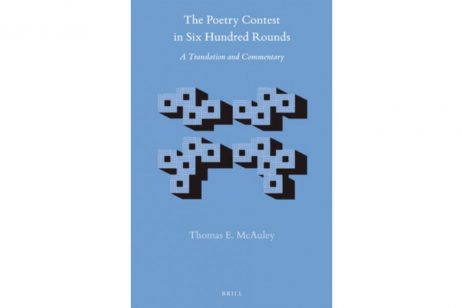
The Poetry Contest in Six Hundred Rounds

For the monumental Poetry Contest in Six Hundred Rounds (Roppyakuban uta’awase) (1193-94), twelve poets each provided one hundred waka poems, fifty on seasonal topics and fifty on love, which were matched, critiqued by the participants and judged by Fujiwara no Shunzei (1114-1204), the premiere poet of his age. The combination of poetry, criticism, judgements and appeal make it one of the key texts for understanding poetic and critical practice in late twelfth century Japan. The Competition and Appeal were presented here for the first time in complete English translation with accompanying commentary and explanatory notes by Dr Thomas McAuley.

17 January 2020

Ainu Art in Contemporary Life

The Ainu are an indigenous people in Japan native to the regions of Hokkaidō, Northern Tōhoku, and Karafuto, among others, that have developed their own original identity, culture, and language over the past centuries. Despite their ancestral roots, the Ainu people have historically suffered from various forms of discrimination and disputes with the rest of Japan, being officially recognised as indigenous to the country only as recently as 2008. Their unique language and traditional culture are at serious risk of being lost and only a few Ainu artists remain. In this talk, Mr Kohei Fujito, an emerging Ainu artist from a young generation based in Akan, Hokkaido, gave a talk along with a small demonstration of his artworks. He spoke about the history & future of Ainu art based on his recent artworks.

Fully bookedMore info

16 January 2020

The Meaning of Tattoos for Ainu Women

The Ainu (“human” or “people”) are an indigenous people in Japan native to the regions of Hokkaidō, Northern Tōhoku, and Karafuto, among others. As part of their ancestral tradition, Ainu women had the custom of getting tattoos on their bodies, including their lips. For the Ainu, the tattoo was perceived as a symbol of beauty, a talisman and an indispensable tool to prepare their body for death. However, the traditional tattoo was legally prohibited by the Japanese government in 1899. In this talk, Mayunkiki, an Ainu artist, talked about the sense of beauty among the Ainu based on her artwork and research, and how the traditional concept of beauty has changed after the imposition of a “Japanese lifestyle”.

16 January 2020

Special Display: Contemporary Ainu Art by Kohei Fujito

The Daiwa Anglo-Japanese Foundation is delighted to introduce several works by the Ainu artist Kohei Fujito, which are on display in the Foundation’s Regency Room. Fujito, an emerging Ainu artist from the young generation based in Akan, Hokkaidō, presents a small selection of his artworks ranging from a knife and sheath to phone cases and sunglasses. The display will be on until the 14th of February 2020.

1 January 2020

Beyond Coronavirus

The novel coronavirus outbreak has shocked the world, severely impacting societies and economies in countries across the globe with the UK and Japan being no exceptions; this year can thus be considered a major historical turning point. Our Annual Seminar Series will examine the world beyond coronavirus from various different perspectives, including the global order, globalisation, human mobility, new technological developments, and changing society and work styles. We will also invite a number of creative experts to discuss the future of museums, design, and architecture, and consider how these areas can find new sources of inspiration and imagination.

27 November 2019

How Japan sees China

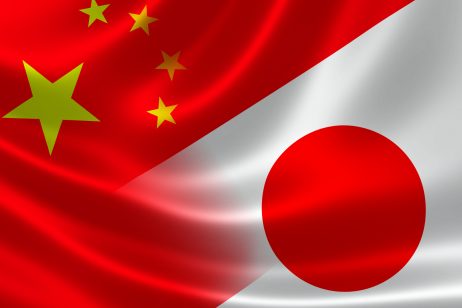
What does China’s Belt and Road Initiative (BRI) mean for Japan? China’s infrastructure investments in Asia, Africa, and Europe pose challenges to Japan’s political and economic influence, and yet it seems as though Tokyo has no choice but to accept the BRI system. In this talk, Dr Taku Tamaki explored the possibility of borrowing the ideas of Japanese philosopher Tetsurō Watsuji as a way to start conceptualising what BRI means for Japan. Watsuji’s idea of aidagara suggests that human existence comprises a complex web of inter-relationships involving subject-subject, as well as environment-subject, inter-relationships; thus we can view BRI as representing Japan’s aidagara with the international environment.

26 November 2019

Artist Talk: Hiroe Saeki in conversation with Ito Ogawa

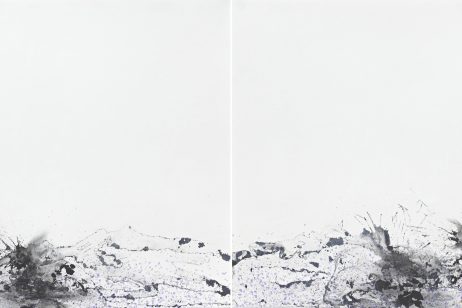
Hiroe Saeki’s work inhabits a liminal zone on the edges of the perceivable: monochromatic explorations of the subject of beauty in nature, delicate drawings with a weightless quality, sparse compositions evoking traditional aesthetics. As in a photograph, the totality of the artwork and the detail are valued equally. In this exhibition, she presents a new body of work with graphite and water. The powdered graphite travels through capillaries of water: settling where and when the water evaporates, to be absorbed by the land of paper. The resulting surfaces recall water-carved planetary landscapes. Together with Ito Ogawa, the artist discussed her influences, her work and the exhibition Cosmogenesis.

Fully bookedMore info

15 November 2019

National Memories and Norms in International Politics in East Asia

Since World War 2, East Asia has experienced dramatic and complex political and economic transformations. Problems associated with emotions, memories, and narratives of the past – particularly those relating to the War and to Japanese colonisation of other countries in the region – are underlying factors that shape the ups and downs of political and economic friction between East Asian countries. The ongoing territorial disputes between China and Japan or South Korea and Japan, for instance, are fundamentally rooted in different perceptions of East Asia’s past. In this seminar, Professor Asano discussed current issues and challenges from a historical perspective.

11 November 2019

The Technology Revolution in Education

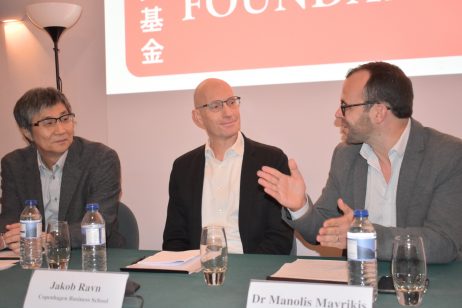
Recent technological innovations have enabled the proliferation of new educational tools and created new ways to deliver educational content globally. These technologies are having a profound impact on society by extending access to education and improving the quality of learning. Moreover, they are expected to extend the frontiers of traditional learning methods, prompting innovation in education systems around the world. Professor Jakob Ravn explained the importance of technology in education, including the impact of technology on learning, and how digital innovation is changing the educational ecosystem. Professor Takehiko Kariya discussed the limitations of the new approaches, and the necessary preconditions that need to be considered to apply them in the Japanese environment.

Fully bookedMore info

8 November 2019

Can museums promote regional revitalization?

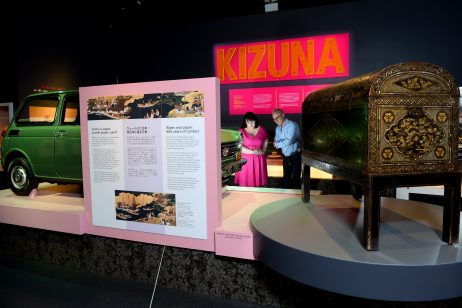
Museums can play an important part in transforming local areas, helping to rejuvenate towns and cities by creating new jobs, boosting local tourism efforts, engaging in outreach programmers and changing the image and atmosphere of an area. Yet how do museums contribute to revitalization efforts? Can all museums have this effect? To answer these questions, David Anderson, Director of Amgueddfa Cymru (National Museum Wales) and Professor Yoshi Miki, curator of the Kizuna: Japan | Wales | Design exhibition, used the Kizuna: Japan | Wales | Design exhibition as a case-study.

7 November 2019

Private View: Cosmogenesis by Hiroe Saeki

The Private View is a chance to have a first look at the exhibition Cosmogenesis by the Berlin-based Japanese artist Hiroe Saeki. In this exhibition, she presents a new body of work with graphite and water. The powdered graphite travels through capillaries of water: settling where and when the water evaporates, to be absorbed by the land of paper. The resulting surfaces recall water-carved planetary landscapes.
Saeki’s practice evokes associations with biological or mineral forms, such as geological sediments. Exquisite, miniscule lines take us to the nano level of the cellular structure of organisms. Combined with the serendipitous nature of her new graphite process, they take on a sense of the cosmic.

Toggle navigation