26 November 2026

Artist-led Gallery Tour: つぐ、つむぐ。- Inherit, Imagine. -
Join us for a gallery tour of the duo exhibition, ‘つぐ、つむぐ。- Inherit, Imagine. -‘ , led by one of the artists, Taihei Soejima.
26 November 2026
Join us for a gallery tour of the duo exhibition, ‘つぐ、つむぐ。- Inherit, Imagine. -‘ , led by one of the artists, Taihei Soejima.
26 November 2026
Join us for the Private View of ‘つぐ、つむぐ。- Inherit, Imagine. -‘ at the Daiwa Anglo-Japanese Foundation.
This exhibition introduces two artists, Taihei Soejima and Yoko Imamura, who do not simply preserve the past, but transform it — connecting it to the future through contemporary modes of expression.
23 November 2026
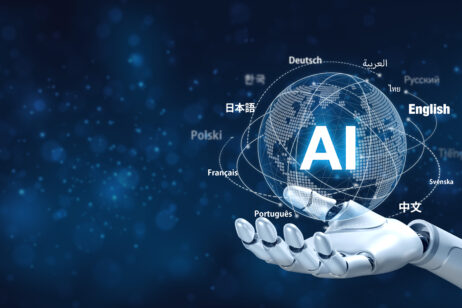
AI now translates between many spoken languages, but sign languages have been largely left behind. In this talk, Professor Richard Bowden traces how AI has learnt to recognise, translate and produce sign language from video. He will show how this work is reaching the real world through Signapse, a University of Surrey spin-out whose AI signers are already used in settings such as public transport. The talk will discuss UMCS, a new five-year UK–Japan research project funded by EPSRC and the Japan Science and Technology Agency, which focuses on natural conversations in British Sign Language and Japanese Sign Language.
16 November 2026
In this webinar, Yuya Mineshima, a Member of Japan’s House of Representatives and of the Team Mirai political party, will explore how his party is using AI and digital technology to transform political participation in Japan. Professor Oliver Escobar from the University of Edinburgh will then share the UK perspective on how AI is reshaping democracy and public policy, exploring its potential to strengthen citizen participation and public involvement in policymaking.
11 November 2026
Japan, long known as a ‘spy paradise’, is reconstructing its intelligence capabilities. In a narrow sense, this can be understood as the continuation of a gradual trend of Japan ridding itself of restrictions that limited the state’s role in national security over the post-war era. In a deeper sense, its implications have to do with the measure of the nation’s political health and the expression of its collective subconscious. In this seminar, Dr Philip Shetler-Jones will explain proposed legal and institutional changes, and what this says about the direction of Japanese society, its threat perceptions and the demands the current international environment makes on Japan.
3 November 2026
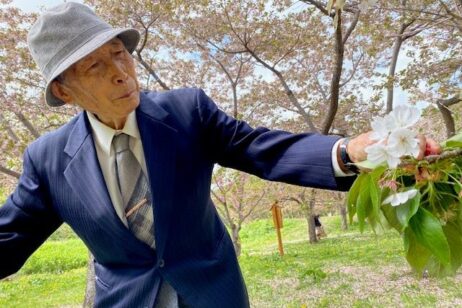
Masatoshi Asari, a 95-year-old Japanese cherry-tree creator who has spent more than 50 years sending sakura overseas, will make his final ‘gift of peace’ next spring when his ornamental cherries go to Ukraine in 2027, five years after the war started. Throughout his life, Asari has regarded cherry blossoms as symbols of peace, friendship and reconciliation.
How can Japanese cherry trees support humanitarian activities in Ukraine, a country devastated by war? Can cherry trees be a testament of hope there? Tracing the human stories behind the trees, this talk will explore these questions.
3 November 2026
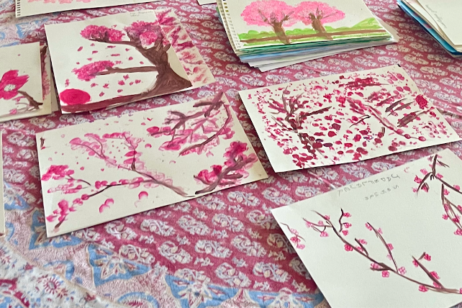
This exhibition accompanies the Japan-Ukraine Sakura Peace Initiative, which is working to bring Japanese cherry trees to Ukraine as symbols of peace, friendship and reconciliation. The project was initiated by London-based Japanese journalist and author Naoko Abe, bringing together a growing network of people around the lifelong work of Masatoshi Asari, a 95-year-old cherry-tree creator
23 October 2026
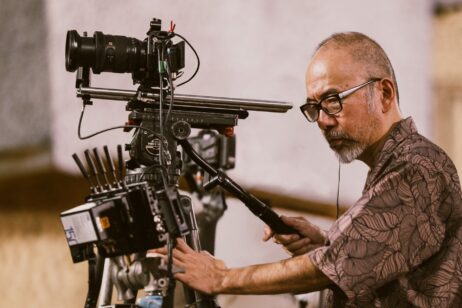
In this webinar, moderated by Professor Alastair Phillips, acclaimed filmmaker Shinya Tsukamoto will discuss his latest film, Mr. Nelson, Did You Kill People?, which recently received the Leoncino d’Oro Award at the 83rd Venice International Film Festival. He will share insights into his work, the concepts and background behind the film’s creation, as well as the inspiration behind the work.
22 October 2026
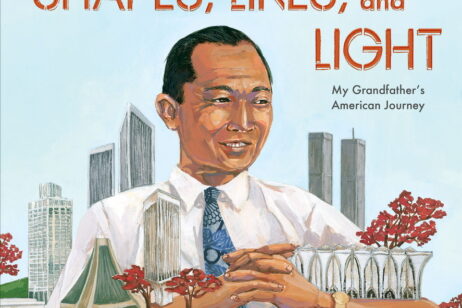
In this talk, artist Katie Yamasaki will reflect on the vision and values of her grandfather, Japanese-American architect Minoru Yamasaki, and explore the complex legacy of the Twin Towers, which he designed, from her personal perspective as his granddaughter in the years following 9/11. Drawing on her book, ‘Shapes, Lines, and Light: My Grandfather’s American Journey’, she will also discuss what she hopes to convey about her grandfather’s life and work, and what she wishes to pass on to younger generations.
14 October 2026
The Japanese are widely renowned for their appreciation of classical music, as demonstrated by the international activities of Japanese musicians as well as the excellent quality of Japan’s concert halls and its supportive concertgoers. But what about Baroque music? Are there historic venues or institutions in Japan comparable to those in Europe? More fundamentally, what is the difference between classical and Baroque music? In this talk, moderated by Dr Thomas A. Cressy, Masato Suzuki spoke about his career and activities, and how Baroque music is also appreciated in Japan by performers and audiences alike. This year, Bach Collegium Japan will be celebrating its 25th consecutive performance of Handel’s Messiah at Suntory Hall, a piece whose features Suzuki will also highlight.
14 October 2026
Join us for a gallery tour of Meiro Koizumi’s solo exhibition in the UK, Spirit of Automatism, led by the artist himself. One of Japan’s most prominent contemporary artists, Koizumi is internationally acclaimed for video installations that explore socio-political issues through re-enactment. Touching on themes of collective memory, war and psychological impact, he is concerned
30 September 2026
To mark the opening of Meiro Koizumi’s solo exhibition, we were delighted to host an artist talk by Meiro Koizumi. He discussed with Tom Denman (standing in for Prof Franke) the ideas and inspiration behind his work.
Koizumi is internationally acclaimed for video installations that explore socio-political issues through re-enactment. Touching on themes of collective memory, war and psychological impact, he is concerned ‘to capture the forms of the violent rituals that support rational modern civilisation at a deep level’.