 Talk
TalkFriday 15 March 2024
6:00pm – 7:00pm
Effect of political reforms on more proactive Japanese external policies
Drinks reception: 7:00pm – 8:00pm
13/14 Cornwall Terrace, Outer Circle (entrance facing Regent's Park), London NW1 4QP
the Daiwa Anglo-Japanese Foundation Organised by
How have political reforms since the 1990s changed Japanese foreign and security policies? In this talk Satoshi Machidori and Harukata Takenaka examined the effects of a series of institutional reforms since 1990 on Japanese foreign and security policy. The first presentation demonstrated that political reform was a reaction to major changes in the international environment in the early 1990s, particularly the end of the Cold War and the bitter experience of the Gulf War. It then showed that as a result, Japanese foreign policy moved away from the traditional “Yoshida Doctrine” after the 1950s and began pursuing more active roles in international relations.
The second presentation closely examined the relationship between Japan’s reformed political institutions and the formation of the Free and Open Indo-Pacific Strategy. It argueed that while the changing international environment in East Asia was certainly a crucial factor which promoted Japan to formulate a new grand strategy, it was the enhanced institutional position of the prime ministership that enabled PM Abe to launch such a strategy. It showed how various organisations in the Cabinet Secretariat made it possible for Japan to form a coherent strategy, combining economic and security policies and engaging with various ministries.
A recording of this event can be viewed here:
About the contributors
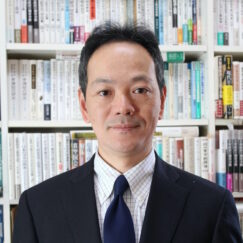
Prof. Satoshi Machidori
Satoshi Machidori is Professor of Political Science at the Graduate School of Law and the School of Government, Kyoto University. He graduated from the Faculty of Law, Kyoto University in 1993, and earned his MA from the University of Wisconsin-Madison in 1997 and his PhD from Kyoto University in 2003. His research focus is on comparative institutional analysis. His major works include Political Reform Reconsidered: The Trajectory of a Transformed Japanese State (Springer, 2023, original Japanese edition published in 2020) and The Japanese Premiership: An Institutional Analysis of the Power Relations (Chikura Shobo, 2012, the Suntory Award).
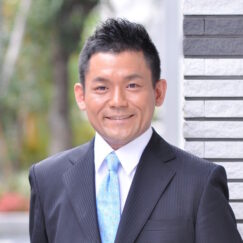
Prof. Harukata Takenaka
Harukata Takenaka is Professor of Political Science at the National Graduate Institute for Policy Studies (GRIPS) in Tokyo. He holds a PhD from Stanford University and a Bachelor of Laws from the University of Tokyo. His key research areas are the role of the Prime Minister in Japanese politics, changes in Japanese external policy, and democratisation in pre-war Japan. His publications include: “Kyokoku Chugoku” to Taijisuru Indo-Taiheiyo Shokoku [Indo-Pacific Nations facing China aspiring to be a “Great Country”](edited) (Tokyo: Chikura Shobo, 2022), Evolution of Japanese security policy and the House of Councillors (Japanese Journal of Political Science, June 2021), Korona Kiki no Seiji [Politics of the Covid 19 Crisis](Tokyo: Chuo Koron Shinsha, 2020), Expansion of the Japanese Prime Minister’s power in the Japanese parliamentary system (Asian Survey, September 2019); Failed Democratization in Prewar Japan (Stanford University Press, 2014); Sangiin to ha Nanika [What is the House of Councillors?] (Tokyo, Chuokoron Shinsha 2010) (10th Osaragi Jiro Award)