Events category: Webinar

28 November 2023

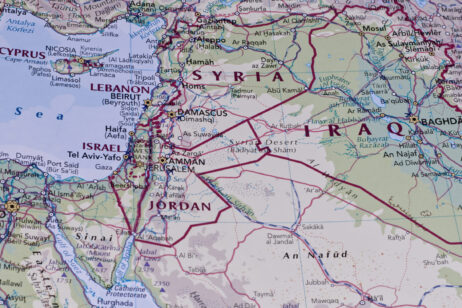
Japan's response to the Israel-Palestine conflict

The ongoing war between Israel and Hamas represents a new shock for international geopolitical relations, coming less than two years after the beginning of the Russia-Ukraine war. Hamas’s attacks and Israel’s response have generated various reactions from governments around the world. Global geopolitical divisions could widen and accelerate further as a consequence of this conflict.

In this webinar moderated by Lawrence Freedman, Japan’s former Deputy Minister for Foreign Affairs Hitoshi Tanaka discussed Japan’s perspective on and response to the Israel-Hamas conflict. He analysed the potential impact on the international order and Japan’s position in it.  Additionally, he shared his opinions about Japan’s role as this year’s G7 host and innovative diplomatic approaches that could be taken towards recent global conflicts.

Booking closedMore info

5 December 2023

Nuclear Ghost: Atomic Livelihoods in Fukushima’s Gray Zone

Nuclear Ghost takes us deep into the liminal zone of once evacuated, post-fallout Minamisōma, a town severely impacted by the 2011 nuclear disaster in Fukushima, Japan. In this talk, moderated by Dr Steger, Dr Morimoto talked about the disaster’s impact on modern Japanese society based on his fieldwork conducted between 2013 and 2019 in coastal Fukushima. More specially, he explained how natural and technological disasters and the resulting techno-sensory politics—half-life politics—of nuclear “things” impacted residents’ lives in post-fallout coastal Fukushima.

Booking closedMore info

30 November 2023

Innovation in Space

A growing number of actors have become involved in space exploration in recent years. International cooperation is key, with the ISS showing a great example of what can be achieved when space agencies from different countries cooperate. But the present geopolitical context of growing frictions between global powers is rendering continued collaboration uncertain, and may lead to more intense competition for hegemony in space in the future. In this seminar moderated by Sara Russell, Naoko Yamazaki discussed the impact of changing relationships between the major national players on prospects for future international cooperation in space exploration, and the contribution of Japan’s innovative space programme.

Booking closedMore info

26 October 2023

車いす1000台を届けて見えたウクライナの未来

ロシアのウラジーミル・プーチン大統領がウクライナに全面侵攻して間もなく600日。元産経新聞ロンドン支局長でニューズウィーク誌日本版のコラム「欧州インサイドReport」を担当する在英16年のベテラン国際ジャーナリスト、木村正人が分かりやすく状況を解説します。ただ「伝える」ことから一歩踏み出して、日本製車いす補助具を現地に届けるお手伝いをしたことをきっかけに日本の中古車いすを整備してウクライナに届けるプロジェクトも取材と同時進行で始めることに。

Booking closedMore info

24 October 2023

Japan's Population Decline and Immigration

Japan’s population decline has accelerated in recent years. In 2022, all of Japan’s 47 prefectures reported a population drop for the first time, and the overall population decline was the largest since records began in 1968. In this webinar, Menju Toshihiro talked about the multiple factors contributing to Japan’s population decline, as well as the different measures being considered to address the issue, including immigration policies. Will Japan implement policies to encourage immigration? If so, what kind of changes will be needed in Japanese society? And what other policy responses will be needed, in both the short and long term?

Booking closedMore info

9 October 2023

Japan's Gender Gap Challenges and Innovative Responses

Japan’s progress in closing its gender gap continues to lag despite government attempts in recent years to promote the economic activity of women. According to the World Economic Forum’s latest Global Gender Gap Report (for 2023), Japan ranked 125th out of 146 countries, its worst result since the report started in 2006. More specifically, women’s participation in politics is remarkably low. In this webinar, moderated by Linda Yueh, Professor Miura explained the current situation of the gender gap in Japan (including differences by Prefecture), the challenges, and some proposals for innovative policy responses.

Booking closedMore info

28 September 2023

Youth political representation in an aging Japan

Young people in Japan are considerably underrepresented in many of the country’s political institutions, leaving decision-making mostly in the hands of older politicians. This age bias in politics may have profound consequences for the structuring of welfare policies in Japan, which faces a declining birth rate and rapidly aging population. In this webinar, Dr.McClean explained why young politicians are so rare, provided evidence that many Japanese voters would like to see this age bias corrected, and demonstrated how the shortage of young politicians significantly affects both democracy and the social policies promoted and implemented by the government.

Booking closedMore info

11 October 2023

Has Ainu culture disappeared? No, it is alive and strong.

Chiri Yukie (1903-1922) published Ainu Shin’yōshū (Collected Ainu Mythological Tales) in 1923. It was the very first book published by an Ainu person in the Ainu language, and it remains the most widely read work of Ainu literature to this day. Professor Nakagawa, a renowned researcher into the Ainu language, has been recording Ainu literature across Hokkaido since 1976. In this talk, on the 120th anniversary of Yukie Chiri’s birth and the 100th anniversary of her book, Professor Nakagawa discussed the enchanting world of Ainu tales and the ongoing movement to revive Ainu language and culture.

Booking closedMore info

26 September 2023

Declining Birth Rates and Innovative Policy

Birth Rates in Japan and the UK have been declining significantly over recent decades, a trend also seen in other OECD countries. Continued long-term declines in fertility may produce large economic and social challenges for the societies affected. These could include changes in policy and institutions that make childbearing and women’s careers more compatible and ways to share the support of an ageing population more equitably through different pension and child support arrangements. In this webinar, moderated by Willem Adema from the OECD’s Social Policy Division, the panelists analyzed the multifaceted factors driving the decline in birth rates in Japan and the UK, establishing correlations with educational level and socio-economic status, and exploring innovative policy responses.

Booking closedMore info

1 June 2023

Global Chip War

The semiconductor industry is at the centre of the geopolitical dispute between the US and China, given its importance to the development of future technologies. The production of advanced semiconductors is concentrated in Asia, with Taiwan producing around 90% of the world’s most advanced chips. Tensions in this area have the potential to affect the global supply chain, affecting countries around the world. In this webinar, the panellists discussed the current status of the global competition over microchips, the challenges we face, and the implications for the global economy and future relations between countries.

Booking closedMore info
Toggle navigation