Past Events

11 October 2023

Has Ainu culture disappeared? No, it is alive and strong.

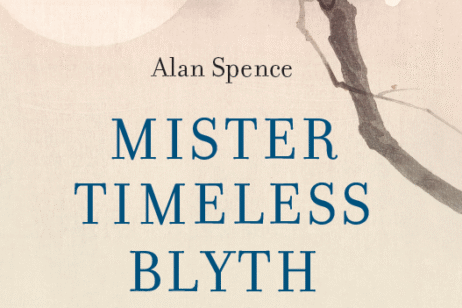
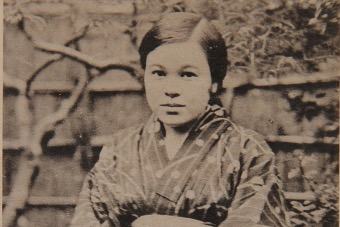
Chiri Yukie (1903-1922) published Ainu Shin’yōshū (Collected Ainu Mythological Tales) in 1923. It was the very first book published by an Ainu person in the Ainu language, and it remains the most widely read work of Ainu literature to this day. Professor Nakagawa, a renowned researcher into the Ainu language, has been recording Ainu literature across Hokkaido since 1976. In this talk, on the 120th anniversary of Yukie Chiri’s birth and the 100th anniversary of her book, Professor Nakagawa discussed the enchanting world of Ainu tales and the ongoing movement to revive Ainu language and culture.

Booking closedMore info

10 October 2023

Gallery Tour: Erase and See by Sumi Kanazawa

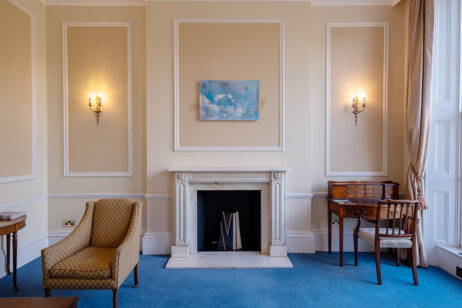
Join us for a free lunchtime tour related to our exhibition, Erase and See by Sumi Kanazawa, led by Daiwa Anglo-Japanese Foundation staff. The tour will focus on the work Drawings on Newspapers and the concepts behind this work, along with a new work derived from Drawing on Newspaper. Kanazawa uses a black 10B pencil to obliterate printed words and images in newspapers, except for those that appeal to her, either for a reason or intuitively. The remaining content is thus excised from its context to weave new stories. As the number of participants is limited, we urge you to sign up quickly.

9 October 2023

Japan's Gender Gap Challenges and Innovative Responses

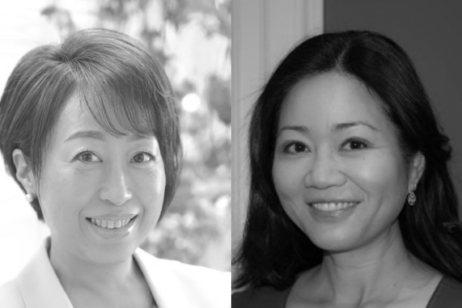
Japan’s progress in closing its gender gap continues to lag despite government attempts in recent years to promote the economic activity of women. According to the World Economic Forum’s latest Global Gender Gap Report (for 2023), Japan ranked 125th out of 146 countries, its worst result since the report started in 2006. More specifically, women’s participation in politics is remarkably low. In this webinar, moderated by Linda Yueh, Professor Miura explained the current situation of the gender gap in Japan (including differences by Prefecture), the challenges, and some proposals for innovative policy responses.

Booking closedMore info

5 October 2023

Sport of Kings: Horse racing in the UK and Japan

Horse racing is a beloved sport and industry in both the UK and Japan, involving entertainment, gambling, and highly-selective breeding, among other aspects. While both countries share a passion for racing, there are distinct differences that set their horseracing scenes apart. In this talk, Dr Kanichi Kusano discussed the history of the horse racing industry up to the present day, drawing a comparison between British “traditional” racing and Japanese “fans and breeding-centric” racing. He also touched on the challenging issues that racing is currently confronting, offering insights from veterinary perspective.

28 September 2023

Youth political representation in an aging Japan

Young people in Japan are considerably underrepresented in many of the country’s political institutions, leaving decision-making mostly in the hands of older politicians. This age bias in politics may have profound consequences for the structuring of welfare policies in Japan, which faces a declining birth rate and rapidly aging population. In this webinar, Dr.McClean explained why young politicians are so rare, provided evidence that many Japanese voters would like to see this age bias corrected, and demonstrated how the shortage of young politicians significantly affects both democracy and the social policies promoted and implemented by the government.

Booking closedMore info

26 September 2023

Declining Birth Rates and Innovative Policy

Birth Rates in Japan and the UK have been declining significantly over recent decades, a trend also seen in other OECD countries. Continued long-term declines in fertility may produce large economic and social challenges for the societies affected. These could include changes in policy and institutions that make childbearing and women’s careers more compatible and ways to share the support of an ageing population more equitably through different pension and child support arrangements. In this webinar, moderated by Willem Adema from the OECD’s Social Policy Division, the panelists analyzed the multifaceted factors driving the decline in birth rates in Japan and the UK, establishing correlations with educational level and socio-economic status, and exploring innovative policy responses.

Booking closedMore info

14 September 2023

Private View and Artist Talk: Sumi Kanazawa in conversation with Jonathan Watkins

This event provided a first look at the work of Sumi Kanazawa and hear her discuss with Jonathan Watkins the ideas and inspiration behind her work for the exhibition Erase and See. Kanazawa’s work Drawings on Newspapers exemplifies her understanding of the contradictions and discrepancies that characterise our past and present. Kanazawa suggests ways of being more imaginative about how to live now, and problematises distinctions conventionally drawn between individuals, politics and society, and between public and private identities.

7 September 2023

The Future of Dance - Crossing Social Borders

Yoriko Maeno is a Japanese dance theatre director and choreographer. Over the past 15 years, Maeno has crossed and blurred the boundaries between dance and other art media, dance and society, and the local and global. In this talk, Maeno introduces her two most recent projects related to local communities, about the culture of the Ama (“sea women”) in Japan, and her series of projects about dementia (2019-2021). Maeno shared her thoughts about the potential ecosystem for dance theatre, and further possibilities for it to tackle current issues facing humanity globally, such as divisions in society and the use of AI.

7 September 2023

Special video screening: AMA-Perlentaucherin by Yoriko Maeno

AMA – the women of the sea, who use no diving equipment as they submerge their bodies into the ocean. Themed on the past and present of these mermaid women who form a cultural heritage unique to the East Asian region, this dance artwork fuses dance, music, art and video projection. This work poses serious questions to us who live in an age in which climate change and ocean pollution have become major issues. The approximately 4000 Ama who worked in Mie Prefecture’s Shima Peninsula 50 years ago have decreased in number by 7/8, with only about 500 left. There are fears that the Ama tradition may die out in the next ten to twenty years.

5 September 2023

NATO and Japan

NATO’s plan to open a liaison office in Tokyo, an idea strongly criticized by China, seems to have been shelved after the French government expressed its opposition. The Western military alliance led by the US seeks to deepen connections with Asia-Pacific allies, prompting concern among some of its member states. In this seminar, Dr Philip Shetler-Jones talked about the impact that a NATO liaison office in Japan might have on the region’s geopolitics and security, and its challenges, and analyzed what is really behind NATO’s plan for an office in Tokyo.

Fully bookedMore info

24 July 2023

Cultural Heritage and Conservation – Notre-Dame Cathedral and Shuri-jo Castle

On April 15th 2019, Notre-Dame Cathedral in Paris caught fire. About six months later, the Seiden (State Hall) of Shuri-jo Castle in Okinawa, Japan, which was a symbol of the Ryukyu kingdom, was completely destroyed by fire. The two buildings were very different in terms of legal status, cultural value, history, materials, and governance. On the other hand, there are quite a few similarities, such as strong social reactions, the role of scientific studies, and the importance of intangible cultural heritage. In this talk, Professor Kono considered the two cases from various angles and offer some thoughts on the recovery of cultural heritage after disasters of this kind.

20 July 2023

Gallery Tour: TENTACLE by Bikky Sunazawa

Join us for a free lunchtime tour related to our exhibition, TENTACLE by Bikky Sunazawa, led by the Foundation’s staff. Bikky Sunazawa was one of Japan’s most prominent post-War sculptors. Born in Asahikawa on the island of Hokkaido, he was self-taught, developing a practice that was concerned essentially with self-expression through capturing the spirit of human and animal subjects. He is most renowned for his woodcarving, sometimes for public sculptures, but also made abstract paintings and drawings, accessories and furniture. The tour focused on Bikky Sunazawa’s art practice, his humanity, and his true nature.

Toggle navigation