Past Events

3 November 2023

Introduction to the Tea Ceremony and Japanese Confectionery (Wagashi)

Japanese confectionery or wagashi, also known as ‘the art you taste with your five senses’, has a long history in Japan, and is closely associated with the traditional tea ceremony. Yasuhiro Hikiami, the 4th generation proprietor of Toyama Prefecture’s famous confectionery producer Hikiami Kōgetsudō, with his superb technical ability, and the creativity that enables him to come up with unexpected and beautiful designs, is a wagashi craftsman widely trusted by tea ceremony practitioners across Japan. His talk and demonstration of wagashi-making will shed light on how these sweets are made, and the thinking that lies behind them.

Fully bookedMore info

26 October 2023

車いす1000台を届けて見えたウクライナの未来

ロシアのウラジーミル・プーチン大統領がウクライナに全面侵攻して間もなく600日。元産経新聞ロンドン支局長でニューズウィーク誌日本版のコラム「欧州インサイドReport」を担当する在英16年のベテラン国際ジャーナリスト、木村正人が分かりやすく状況を解説します。ただ「伝える」ことから一歩踏み出して、日本製車いす補助具を現地に届けるお手伝いをしたことをきっかけに日本の中古車いすを整備してウクライナに届けるプロジェクトも取材と同時進行で始めることに。

Booking closedMore info

24 October 2023

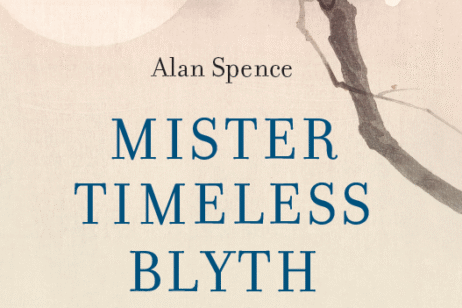
Mister Timeless Blyth

Imprisoned as a conscientious objector during the first World War and interned as an enemy alien in Japan during the second, RH Blyth was a poet, a scholar, a musician, a linguist and a man of Zen who became a teacher to an emperor. Ultimately, he became the key link and mediator between the Japanese Imperial Household and the occupying American forces. He spent the better part of his lifetime building bridges between East and West and was an influence on a whole generation of American writers – Ginsberg, Salinger, Keroauc, Snyder – through his translations of Japanese haiku. He was, in many ways, a man who changed the world. Mister Timeless Blyth is his story.

Booking closedMore info

24 October 2023

Japan's Population Decline and Immigration

Japan’s population decline has accelerated in recent years. In 2022, all of Japan’s 47 prefectures reported a population drop for the first time, and the overall population decline was the largest since records began in 1968. In this webinar, Menju Toshihiro talked about the multiple factors contributing to Japan’s population decline, as well as the different measures being considered to address the issue, including immigration policies. Will Japan implement policies to encourage immigration? If so, what kind of changes will be needed in Japanese society? And what other policy responses will be needed, in both the short and long term?

Booking closedMore info

13 October 2023

Fukiko Takase Dance Performance & Conversation with Adrienne Hart

Fukiko Takase is an American-born Japanese contemporary dancer. Born in New York, she was raised in Japan by dancers Takako Takase and Katsuko Orita, growing up in studios and theatres from an early age. Over the past 15 years, Fukiko worked with Henri Oguike Dance Company and Company Wayne McGregor before becoming an independent solo artist. In this event, moderated by Adrienne Hart, Fukiko will demonstrate some pieces of contemporary dance in which she has collaborated with Adrienne Hart, and explain the concepts behind the works. Fukiko will also tell us about her dance experiences and share her love of dancing with us, along with her recent activities.

Booking closedMore info

13 October 2023

Special Video Screening: 'See Art through the Body' and '1001' by Fukiko Takase

The Daiwa Anglo-Japanese Foundation is delighted to present two dance video works by Fukiko Takase – ‘1001’ and ‘See Art through the Body’. These pieces use dynamic dance performances to interrogate human cognition and physicality in modern society.

‘1001’ explores the idea of technology and humanity and mind-body dualism, the notion that humans have a mind with free will and a body that excites mechanical movements, both existing independently and interacting with each other. In ‘See Art through the Body’, in which Fukiko collaborated with sculptor Meg Shirayama and singer and vocal performer Hatis Not, the work is a highly experimental and playful multi-disciplinary creative idea which brings together an immersive gallery experience by collaboration with an artist in gallery and museum space.

11 October 2023

Has Ainu culture disappeared? No, it is alive and strong.

Chiri Yukie (1903-1922) published Ainu Shin’yōshū (Collected Ainu Mythological Tales) in 1923. It was the very first book published by an Ainu person in the Ainu language, and it remains the most widely read work of Ainu literature to this day. Professor Nakagawa, a renowned researcher into the Ainu language, has been recording Ainu literature across Hokkaido since 1976. In this talk, on the 120th anniversary of Yukie Chiri’s birth and the 100th anniversary of her book, Professor Nakagawa discussed the enchanting world of Ainu tales and the ongoing movement to revive Ainu language and culture.

Booking closedMore info

10 October 2023

Gallery Tour: Erase and See by Sumi Kanazawa

Join us for a free lunchtime tour related to our exhibition, Erase and See by Sumi Kanazawa, led by Daiwa Anglo-Japanese Foundation staff. The tour will focus on the work Drawings on Newspapers and the concepts behind this work, along with a new work derived from Drawing on Newspaper. Kanazawa uses a black 10B pencil to obliterate printed words and images in newspapers, except for those that appeal to her, either for a reason or intuitively. The remaining content is thus excised from its context to weave new stories. As the number of participants is limited, we urge you to sign up quickly.

9 October 2023

Japan's Gender Gap Challenges and Innovative Responses

Japan’s progress in closing its gender gap continues to lag despite government attempts in recent years to promote the economic activity of women. According to the World Economic Forum’s latest Global Gender Gap Report (for 2023), Japan ranked 125th out of 146 countries, its worst result since the report started in 2006. More specifically, women’s participation in politics is remarkably low. In this webinar, moderated by Linda Yueh, Professor Miura explained the current situation of the gender gap in Japan (including differences by Prefecture), the challenges, and some proposals for innovative policy responses.

Booking closedMore info

5 October 2023

Sport of Kings: Horse racing in the UK and Japan

Horse racing is a beloved sport and industry in both the UK and Japan, involving entertainment, gambling, and highly-selective breeding, among other aspects. While both countries share a passion for racing, there are distinct differences that set their horseracing scenes apart. In this talk, Dr Kanichi Kusano discussed the history of the horse racing industry up to the present day, drawing a comparison between British “traditional” racing and Japanese “fans and breeding-centric” racing. He also touched on the challenging issues that racing is currently confronting, offering insights from veterinary perspective.

28 September 2023

Youth political representation in an aging Japan

Young people in Japan are considerably underrepresented in many of the country’s political institutions, leaving decision-making mostly in the hands of older politicians. This age bias in politics may have profound consequences for the structuring of welfare policies in Japan, which faces a declining birth rate and rapidly aging population. In this webinar, Dr.McClean explained why young politicians are so rare, provided evidence that many Japanese voters would like to see this age bias corrected, and demonstrated how the shortage of young politicians significantly affects both democracy and the social policies promoted and implemented by the government.

Booking closedMore info

26 September 2023

Declining Birth Rates and Innovative Policy

Birth Rates in Japan and the UK have been declining significantly over recent decades, a trend also seen in other OECD countries. Continued long-term declines in fertility may produce large economic and social challenges for the societies affected. These could include changes in policy and institutions that make childbearing and women’s careers more compatible and ways to share the support of an ageing population more equitably through different pension and child support arrangements. In this webinar, moderated by Willem Adema from the OECD’s Social Policy Division, the panelists analyzed the multifaceted factors driving the decline in birth rates in Japan and the UK, establishing correlations with educational level and socio-economic status, and exploring innovative policy responses.

Booking closedMore info
Toggle navigation