Past Events

21 April 2022

The war in Ukraine and the impact on the international order

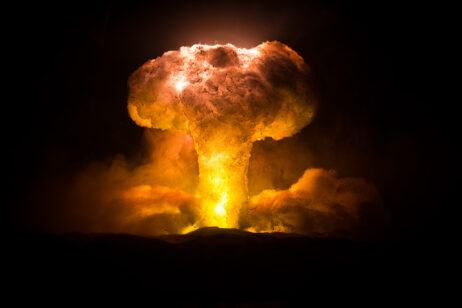
Over a month has passed since the start of the Ukraine war, an event that has shocked the international community and will have global consequences. Might a prolonged war bring us to the brink of World War III? In this webinar, we discussed the causes of the conflict, as well as its future implications for the international order. We also analysed the role of global actors such as the US, Europe, Japan and China, and talked about the impact the war is having around the world, with a particular focus on Asia. 

8 April 2022

Kawanabe Kyōsai and the RA’s History with Japan

Kawanabe Kyōsai (1831-1889) was one of the most important Japanese painters of the 19th century, although he has been overlooked for decades, especially compared to his early counterparts, Katsushika Hokusai and Utagawa Hiroshige. His witty, energetic, and imaginative work is now being rediscovered and celebrated, with its influence felt strongly in numerous artistic styles today, from manga to tattoos. In this webinar, Rebecca Salter, the 27th President of the Royal Academy of Arts, talked about the RA’s historical involvement with Japan and discussed Kyosai’s life and works with Koto Sadamura, curator of the current RA exhibition, Kyōsai: The Israel Goldman Collection.

29 March 2022

Artist Talk by Saeborg

In this talk, award-winning Japanese artist Saeborg shared the trajectories of her practice and discussed some concepts which she is planning to develop further – Oikos, life/biology, power and vulnerability, care, and viruses.

Fully bookedMore info

17 March 2022

Private View: The wind blows in by Asako Shiroki

The Private View was a chance to have a first look at the exhibition The wind blows in by Asako  Shiroki.

The Daiwa Anglo-Japanese Foundation is pleased to showcase Asako Shiroki’s first UK solo show, The wind blows in. Originally trained in silversmithing, Shiroki moved on to working in wood. She describes this natural material as simultaneously confrontational, adaptable, and a means to explore the temporal process of bringing form to raw material. The performative act of working the wood crystallises in the exhibition space as an installation, choreographed in physical relationships, balance, and tension between shapes. Shiroki respects the ephemeral nature of reality and how metamorphosis takes place in our environment; she reflects fragility and strength through her practice, hence her works can be dismantled to lie dormant until they are ready to be re-assembled.

1 March 2022

Sharing Senses

During the pandemic we experienced a transformation of standard methods of communication, with a significant increase in online interaction.  The workshop “Sharing Senses” aims to share senses with participants online, through our computer screens. Participants will explore the possibility of sharing senses in separate three-dimensional spaces by using a two-dimensional screen and online communication. 

Fully bookedMore info

24 February 2022

Art x Ecology x Japan

The COVID-19 pandemic has been a catalyst for paradigm shifts pulling together societies to get through hard times. Founded during the pandemic, in Japan, “art for all” was initiated to broaden the understanding of diverse cultural and artistic activities and to discuss how contemporary art contributes to our society through enlightening and investigating, creating dialogue and supporting social reforms.

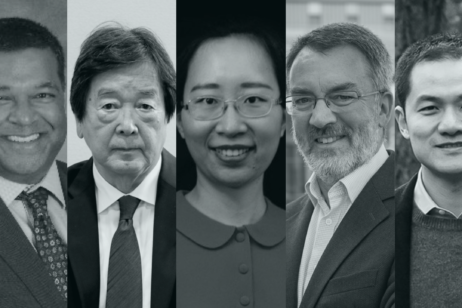
This first talk, in a series of three, explores some case studies in Japan. Ms Wakabayashi Tomoko, Dr Justin Jesty, Yoi Kawakubo and Towa Takaya explained how “art for all” began, why it was needed, what its current activities are, what forms of support currently exist in the art world and their respective visions for the future.

Fully bookedMore info

17 February 2022

Reaching Net-Zero Emissions with Ocean Renewable Energies, and Japan's ocean wave energy potential and stability

The energy crisis, climate change impacts, and hence, commitments to net-zero emission have brought renewable energies into focus. Ocean renewable energies have been considered a promising alternative to fossil fuels in areas exposed to open water bodies. However, climate change may alter the available resources and suitable locations for energy extraction. In this seminar, we focused on the wave energy potential in Northeast Asia and Japan and its stability under a changing climate, and discussed the suitable areas for future planning considering the long-term change of resources in line with Sustainable Development Goals (SDGs).

Fully bookedMore info

3 February 2022

Eleven Winters of Discontent: The Siberian Internment and the Making of a New Japan

In August 1945 the Soviet Union seized the Japanese puppet state of Manchukuo and the colony of Southern Sakhalin, capturing more than 600,000 Japanese soldiers, who were transported to labour camps across the Soviet Union but primarily concentrated in Siberia and the Far East. The Japanese prisoners became a workforce for the rebuilding Soviets, as well as pawns in the Cold War. In Eleven Winters of Discontent, Sherzod Muminov draws on extensive Japanese, Russian, and English archives, memoirs and survivor interviews, to piece together a portrait of life in Siberia and, for those who survived, life in Japan afterward.

Toggle navigation