Past Events

22 April 2021

New Frontiers: Robotics, Technology, and the Future of Dance

In this talk, Adrienne Hart, Artistic Director of Neon Dance, discussed the new contemporary dance work ‘Prehension Blooms’ with her collaborator Dr Hemma Philamore from the University of Bristol’s Robotics Lab. The work combines dance with robotics to explore loneliness, companionship, and belonging. The creative duo shared early-stage prototype designs and Professor Takashi Ikegami (University of Tokyo) commented on the project as well as offering an insight into his own cutting-edge research centered on complex systems and artificial life. The speakers ended this webinar by sharing their thoughts on how emerging technologies might influence dance in the future.

Fully bookedMore info

16 April 2021

Fake News and Social Media: Perspectives from the UK and Japan

The rise of “fake news” and other forms of misinformation are eroding trust in real news, generating concern in democratic systems worldwide. Fake news has also become an integral part of the political debate and political campaigning. The spread of inaccurate beliefs and misinformation have the potential to undermine democracies and create an atmosphere of uncertainty and confusion. In this webinar, chaired by James Harding, we discussed the current situation in the UK and Japan, the effects of social media on journalism, and the impact of the age of fake news on democracy.

Fully bookedMore info

9 April 2021

Women in Politics in the UK and Japan

Gender balance in politics can improve the quality and responsiveness of public policy, increase public trust in government and provide a better reflection of society. Despite the benefits of greater inclusion of women in politics, women in Japan and the UK still face barriers which restrict them from attaining full participation in political life. While the UK has shown significant progress in this regard, female representation in the Japanese Diet is at only 9.9%. This webinar discussed the importance of women in politics, the current situation in the UK and Japan, the barriers and obstacles to female participation, and gave recommendations to deal with them.

Fully bookedMore info

31 March 2021

Women in Classical Japanese Literature

Classical Japan was scene of a great cultural flourishing, an era of literary and artistic output unrivalled anywhere in the world. Women, though living in an otherwise highly oppressive patriarchal society, were just as significant in this literary environment. In this webinar we explored this extraordinary era of women’s writing with reference to the seminal works of Murasaki Shikibu and Sei Shōnagon: Professor Haruo Shirane posed the question “Why did a woman write the Tale of Genji in the 11th century?”, while Dr Jennifer Guest discussed literary education for women, including how early women writers interacted with Chinese texts, using the Pillow Book as her main example.

Fully bookedMore info

26 March 2021

日本の桜を救ったイギリス人

英国人園芸家のコリングウッド・イングラム(1880-1981)は20世紀初めに日本の桜の虜になり、明治・大正・昭和期に3度訪日して桜の穂木を持ち帰り、ケント州の自庭に植えて素晴らしい「桜園」を創りました。最盛期には130種類近くが植樹され、イングラムはそれらを英国や欧米社会に紹介し、広めました。 イングラムにとって一番大切だったのは桜の「多様性」です。ところが日本では当時、伝統の桜が忘れられて多数の品種が絶滅の危機に瀕していました。明治以来の近代化政策によって、人々は多品種を生んだ桜文化を忘れてしまったのです。日本で絶滅した「太白」桜は、イングラムが1932年、日本に里帰りさせ、イングラムは多様な桜を大事にするよう、日本人に警告を発します。しかし、その後日本はクローンの「染井吉野」に席巻され、まっしぐらに軍国主義の道を歩みます。 

25 March 2021

British and Japanese Charities Historically Compared

Since the Great Hanshin-Awaji Earthquake in 1995, Japanese people have started to encounter unfamiliar words and deeds such as ‘volunteering’ and ‘charity’ on the TV news and in magazines and newspapers. Before that disaster, the existence of charity in Japan was rarely noticed, although of course that does not mean that there was no indigenous tradition or practice of charity. Professor Shusaku Kanazawa will talk about the peculiarity of Britain in terms of charity through the lens of some Japanese observers in the 19th and 20th centuries.

Fully bookedMore info

23 March 2021

Poverty in the UK and Japan

The “invisibility” of poverty in Japanese society has long been one of the reasons for the underestimation of this social issue by the authorities. Nevertheless, data from the OECD reveals that the poverty rate in Japan (15.7% in 2018) is actually higher than that in the UK (11.7%). In this talk, Dr Aya Abe described how Japan “discovered” the problem of child poverty and how social science informed policymakers. Then, Dr David Gordon discussed the UK’s experience of child poverty, its anti-poverty policies, and some of the lessons that have been learned from poverty research.

Fully bookedMore info

18 March 2021

Queer Cinema: the Global Context and Japan

Queer cinema has evolved significantly over the past few decades, becoming a new mainstream cinema option, and raising awareness of the experiences of the LGBTQ+ community worldwide. There has been a remarkable increase in the number of queer films produced recently by activists and other related communities. Queer film festivals nowadays play an important role not only in screening non-commercial films but also in supporting the LGBTQ+ community. In this webinar, Professor Karl Schoonover discussed how queer cinema has evolved globally. Dr Yuka Kanno then explored the relationship between activist films and queer communities in Japan.

Fully bookedMore info

2 March 2021

10 years from the Tohoku Earthquake and Tsunami

On 11 March 2011 Japan experienced the Tohoku Earthquake, the most powerful earthquake ever recorded in the country. The quake was followed by a massive 120-foot-high tsunami smashing into the coast of north-east Japan. The tsunami wiped out many coastal communities, dragging houses, cars, trees and people on its way. This natural disaster resulted in the greatest loss of life Japan has suffered from a single event since the end of World War II. In this webinar, British journalists Jon Snow and Richard Lloyd Parry spoke about their different experiences reporting the tragedy, describing the impact of the disaster as they witnessed it on the ground.

Fully bookedMore info

26 February 2021

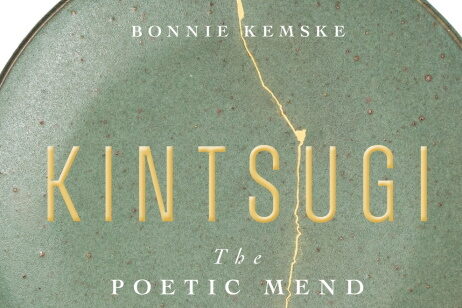
Kintsugi - The Poetic Mend

The Japanese repair technique of kintsugi restores beauty and function to broken objects, leaving visible lines that appear as solid gold. These golden seams speak of kintsugi’s innate metaphor of fortitude, individuality, and the strength to be found in overcoming loss and hardship. Kintsugi: The Poetic Mend tells the story of this remarkable art form through its technical and practical elements, its origins, and its connections to today’s world. With a Daiwa Foundation grant, Dr Kemske interviewed maki-e artists and ceramicists in Japan, and their stories express kintsugi’s deep-rooted place in Japanese culture, giving the reader an experience of kintsugi on a personal level.

Fully bookedMore info

23 February 2021

Ainu Mosir - a movie starring Ainu people

The film Ainu Mosir, directed by Japanese filmmaker Takeshi Fukunaga, depicts an Ainu boy’s life story in modern society, and shows his ambivalence to his traditional Ainu heritage. The film gives a multifaceted picture of the Ainu community and culture, as well as the generational differences within it. As a Japanese filmmaker, Fukunaga looks for ways to tell his stories truthfully. The result is a fictional film starring Ainu non-actors playing. Fukunaga hopes that the film gives Ainu people a voice and helps to create a better understanding of them. In this talk chaired by Alastair Phillips, the film will be examined from various perspectives.

Fully bookedMore info

19 February 2021

New COVID-19 Variants: The Race between Vaccines and the Virus

As vaccination campaigns began to be rolled out in the UK and other countries, new strains of the virus emerged. The number of coronavirus cases in the UK has dramatically increased since December, with many attributed to one of the new variants, while two other important variants have emerged in South Africa and Brazil. All these strains have been identified in Japan, where the infection rate is also increasing. There are growing concerns about whether existing vaccines are effective against the new strains. In this webinar, Dr Ono from Imperial College London explained the relationship between vaccines, new variants, and immunity.

Fully bookedMore info
Toggle navigation