今までのイベント

18 February 2021

Science communication from Fukushima to COVID

After the Fukushima nuclear accident, the Japanese government struggled to communicate to the public information about the situation and the likely radiation risks. By contrast, four days after the accident the UK Government’s CSA Sir John Beddington released a worst-case scenario of the accident and predictions. This enabled people in Japan to get reliable information. Following this experience, the Japanese government tried to develop a more robust framework for scientific advice, but were overwhelmed by the COVID-19 pandemic. The journalist Shigeyuki Koide explained from a journalist’s perspective why the Japanese government in 2011 failed to communicate the science. Professor Cope discussed the British government’s approach of communicating promptly to the public.


Fully bookedMore info

12 February 2021

シャーロック・ホームズで読み解く英国

名探偵といえば誰もがシャーロック・ホームズを思い浮かべますが、シャーロック・ホームズについてどれほどご存知でしょうか。シャーロック・ホームズが活躍した19世紀末の英国へ想いを馳せ、シャーロック・ホームズを学問として研究してしまう「シャーロキアン」の観点から、推理小説として楽しむにとどまらず、英国をより深く知るきっかけとして読み解いていきます。さらに、シャーロック・ホームズと日本の知られざるつながりについてもご紹介いたします。

Fully bookedMore info

28 January 2021

1945年以降の「日本の写真作品」

This talk will provide an introduction to Japanese photography. It traces developments chronologically from post-war Realism to the diversity of contemporary photography. Fritsch focusses on selected photographers whose work she has researched in depth for her recent publication, Ravens & Red Lipstick: Japanese Photography since 1945 (Thames & Hudson/Seigensha, 2018) and whom she knows personally. These include Kawada Kikuji, Hosoe Eikoh, Moriyama Daido, Ishiuchi Miyako, Yoneda Tomoko, and Sawada Tomoko, amongst others.

Fully bookedMore info

26 January 2021

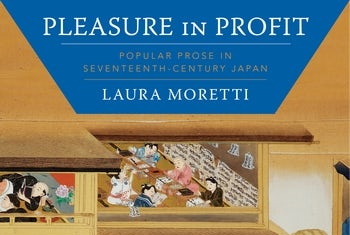
Pleasure in Profit

In the first comprehensive study of the birth of Japanese commercial publishing, Dr Laura Moretti investigates the world of popular literature. She marshals new data on the magnitude of the seventeenth-century publishing business and highlights the diversity and porosity of its publishing genres. Moretti explores how booksellers sparked interest among readers and demonstrates how they tantalized consumers. In this book launch, Dr Moretti presented some of the key arguments that she puts forward in ‘Pleasure in Profit’. She also introduced a number of primary sources and fleshed out the wealth of information packed in this monograph.

Fully bookedMore info

20 January 2021

Beyond Kawaii: Studying Japanese Femininities at Cambridge

Kawaii. The love of all things cute has become the dominant image of Japanese girls and women. Real Japanese women are, however, more complex. Some celebrate their uterus, others experiment with fashion and cross-dressing or embrace their chubbiness, and many struggle with motherhood. Some may even return as vengeful ghosts. This third collection of studies by young scholars from the University of Cambridge looks beyond the kawaii image and explores the diversity and complexity of being a Japanese woman in the new millennium. It explores gender issues in contemporary Japanese society by focusing on women’s lives and their identities in the twenty-first century.

Fully bookedMore info

1 January 2021

RETHINK

2020 was a year of extraordinary change. The pandemic has transformed the world dramatically, affecting many aspects of our lives and posing significant challenges for institutions and individuals around the world. It has changed perspectives in many ways, and is making us rethink the future. This year, we would like to go into depth in rethinking existing international frameworks, systems and social models, to understand the nature of the problems that have emerged and examine where we are going, and how we can reach a better future. 

10 December 2020

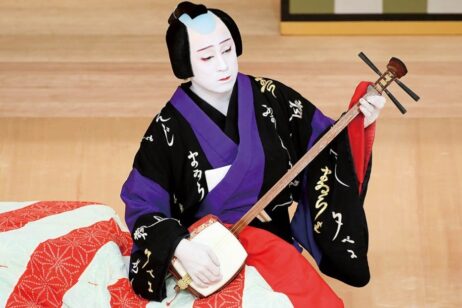
Kabuki: Matsumoto Kōshirō X on Tradition and Innovation

Kabuki is a traditional Japanese performance art known for its rich fusion of drama, dance, music, stylised gesture, and costumes. Although its rich history makes it tempting to consider it a solely traditional art form, kabuki is innovative and has consistently evolved to adjust with the times. In this webinar, Matsumoto Kōshirō X explained the relationship between tradition and innovation from the perspective of a kabuki actor, and shared his thoughts on how kabuki has responded to the pandemic and how it will evolve in the future.

Fully bookedMore info

1 December 2020

The Shogun’s Silver Telescope

This book takes up the matter of the arrival of the English in Japan in 1613. It addresses why they sought access to Japan, and how they prepared themselves to enter the market. Screech argues that the English presence in Japan in this period was extremely important. His argument centres on the decision to send the spectacular present of a silver-gild telescope to the retired shogun, Tokugawa Ieyasu. It was the first telescope to leave Europe and the first built to be a royal present. This book thus outlines a key but forgotten answer to the vexed question of why the missions were closed in Japan, after so many decades of successful evangelism.

Fully bookedMore info

24 November 2020

The New Global Order after the US Election

The protracted presidential election process has put America in the limelight, with the world watching intently to see who would take the reins and lead this global superpower. In this webinar, Professor G. John Ikenberry discussed how the global order and power balance are likely to be impacted, especially in Asia, with reference to his new book ‘A World Safe for Democracy’ (Yale 2020). Then, Wataru Sawamura, Bureau Chief of The Asahi Shimbun in Washington, shared his thoughts on the impact of the US election on Japan-US relations and Japan’s global position.

Fully bookedMore info

23 November 2020

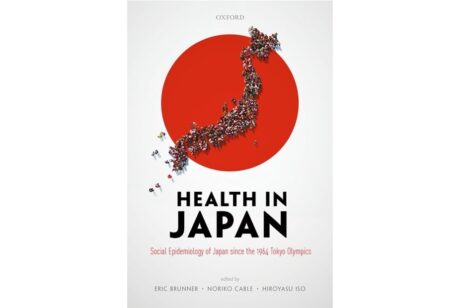
Health in Japan 1960-2020

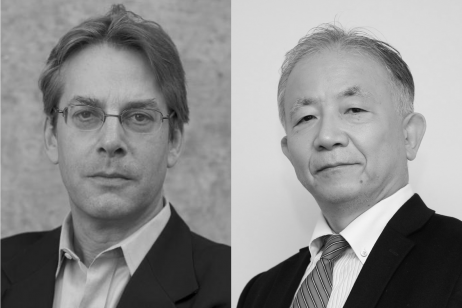
In the second half of the 20th century Japan made remarkable gains in life expectancy. To this day Japan remains one of the healthiest and most equal societies in the world, despite the recent economic slowdown. ‘Health in Japan’ brings together the research and broader perspectives of Japan’s leading social epidemiologists in English for the first time. In this 90-minute seminar and book launch, Professor Richard Wilkinson and Professor Gill Livingston reflected on Japan’s success in population health, linking social organisation to the health issues which are so important for Japan and many other countries.

Fully bookedMore info

13 November 2020

Contemporary Dance during Lockdown

The dance industry is one that operates on thin margins, and with the current pandemic having a serious impact on all the arts, for dance specifically both institutions and practitioners are in serious financial danger. In this talk, Alistair Spalding of Sadler’s Wells spoke about the impact of the coronavirus pandemic on the dance sector, the transformation of dance, and the role of dance in society. Then, contemporary dancer Fukiko Takase discussed a new methodology of contemporary dance and her recent activities during lockdown.

Fully bookedMore info

6 November 2020

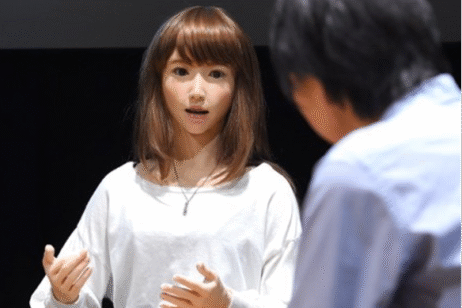
The future of human-robot interaction

We humans have an innate brain function that enables us to recognise other humans. So very human-like robots – androids – can be ideal vehicles for human-computer interactions. Professor Hiroshi Ishiguro has developed various types of interactive robots and androids in order to study these technologies and understand human nature, and has contributed to establishing Human-Robot Interaction as an area of research. Recently he has been developing and studying autonomous conversational robots and androids, especially focussing on embodiment, emotion and intention/desire of robots and androids. In this webinar, he discussed the society of the future. Professor Oliver Brock then addressed the challenges and obstacles of AI/Robotics.

Fully bookedMore info
Toggle navigation