Events category: Annual Seminar Series Seminar

16 June 2021

Modern Human Society as seen by Primatologists

The dramatic transition to virtual interaction in recent times, brought about through advances in information technology and pandemic-necessitated social distancing, indicates a change in the rule of thumb for mankind for millions of years: that society is created through continued physical interactions. In this webinar, we looked at the evolution of human beings and explore modern human societies from the perspective of primate societies. Dr Juichi Yamagiwa talked about the parallels between ape societies and human societies while Dr Karen B. Strier talked about the parallels between New World monkey societies and human societies.


24 November 2020

The New Global Order after the US Election

The protracted presidential election process has put America in the limelight, with the world watching intently to see who would take the reins and lead this global superpower. In this webinar, Professor G. John Ikenberry discussed how the global order and power balance are likely to be impacted, especially in Asia, with reference to his new book ‘A World Safe for Democracy’ (Yale 2020). Then, Wataru Sawamura, Bureau Chief of The Asahi Shimbun in Washington, shared his thoughts on the impact of the US election on Japan-US relations and Japan’s global position.

Fully bookedMore info

6 November 2020

The future of human-robot interaction

We humans have an innate brain function that enables us to recognise other humans. So very human-like robots – androids – can be ideal vehicles for human-computer interactions. Professor Hiroshi Ishiguro has developed various types of interactive robots and androids in order to study these technologies and understand human nature, and has contributed to establishing Human-Robot Interaction as an area of research. Recently he has been developing and studying autonomous conversational robots and androids, especially focussing on embodiment, emotion and intention/desire of robots and androids. In this webinar, he discussed the society of the future. Professor Oliver Brock then addressed the challenges and obstacles of AI/Robotics.

Fully bookedMore info

30 September 2020

Beyond Coronavirus: The Future of Museums

While the coronavirus pandemic has had wide-reaching financial impacts, the museum sector has been particularly badly hit. It is estimated that one in three of these museums will have to downsize to survive, while 13% may have to close down permanently – this would be the closure of over 10,000 museums worldwide. In further bad news, a recent survey in Britain indicated that almost a third of population would not feel safe returning to museums for a long time, even if they are open. In this seminar, chaired by James Harding, renowned museum directors from the UK and Japan discussed the challenges faced by museums and exhibitions around the world during the current coronavirus crisis.

Fully bookedMore info

25 June 2020

Working remotely with caring responsibilities

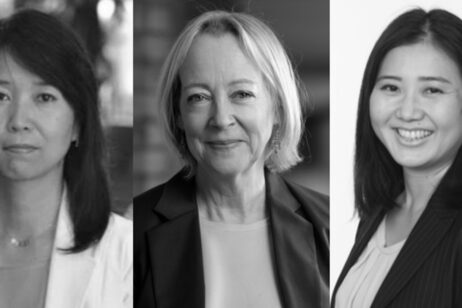
Remote work has become increasingly popular worldwide as a result of the Coronavirus pandemic, and it looks likely to play a continuing role in the ‘new normal’ once the virus has been successfully tackled. Working from home can give employees greater flexibility, time savings, and increased productivity. But it can also bring new challenges, especially for those with caring responsibilities for children, elderly relatives, or people with disabilities. In this webinar, Ms Jun Mukoyama, Ms Sayuri Daimon and Professor Lynda Gratton discussed the current situation for people in Japan and the rest of the world, through different perspectives.

Fully bookedMore info

3 June 2020

Leadership in crisis: does gender matter?

Unprecedented challenges brought on by the coronavirus pandemic have tested the leadership of organisations, companies and countries around the globe. In this webinar, we discussed leadership in times of crisis, and asked the questions: ‘What are the key elements in successful leadership in crisis?’ and ‘Does gender matter?’. Avivah Wittenberg-Cox shared examples of female crisis leadership and discuss what their responses have in common. Yumiko Murakami, Head of the OECD Tokyo Center, shared the OECD’s analysis on the role of trust in government, how gender diversity can impact the policy-making process and addressed the provocative question: does “female” leadership work better in time of crisis?

Fully bookedMore info

11 November 2019

The Technology Revolution in Education

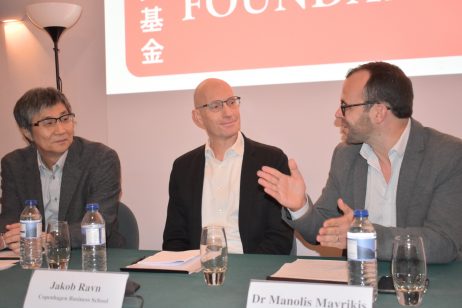
Recent technological innovations have enabled the proliferation of new educational tools and created new ways to deliver educational content globally. These technologies are having a profound impact on society by extending access to education and improving the quality of learning. Moreover, they are expected to extend the frontiers of traditional learning methods, prompting innovation in education systems around the world. Professor Jakob Ravn explained the importance of technology in education, including the impact of technology on learning, and how digital innovation is changing the educational ecosystem. Professor Takehiko Kariya discussed the limitations of the new approaches, and the necessary preconditions that need to be considered to apply them in the Japanese environment.

Fully bookedMore info

29 October 2019

The Challenge of Migration in the UK and Japan

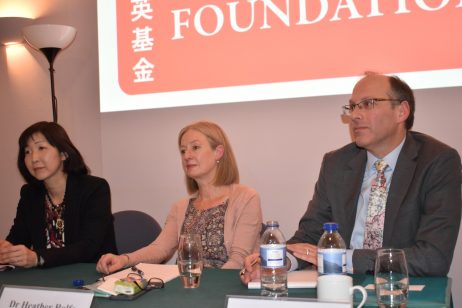
Migration has become one of the most prominent global issues of the 21st century. In the UK, the possibility of a no-deal Brexit in October this year might severely impact low-skilled migration, while in Japan some see migration as an important potential solution to the imminent demographic challenge the country is facing. In this seminar chaired by Professor Brad Blitz, two speakers explained the current migration situation in the UK and Japan. Dr Heather Rolfe focused on low skilled migration in the UK, and Dr Nana Oishi then presented the growing ‘brain drain’ phenomenon in Japan.

Fully bookedMore info

17 October 2019

Digital Technologies and Global Innovation

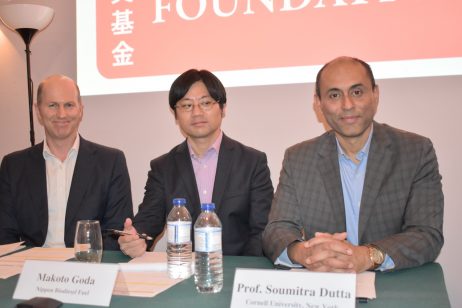
Innovation bringing global change can emerge from anywhere in the world. Recent innovations in digital technologies applied to new business models, such as FinTech and digital payments, have started to generate significant benefits for our economies and societies. These technologies are expected to expand the frontiers of traditional financing systems. In this seminar, Soumitra Dutta explained how digital technologies are expected to impact global innovation. Makoto Goda explained the impact of digital transformation in the context of local economies, as well as presenting some examples of local currency applications in Japan. Finally, Ben Brabyn talked about the innovation ecosystem in London, and how to apply a similar model to other cities.

Fully bookedMore info

1 July 2019

The role of design in a new digital era

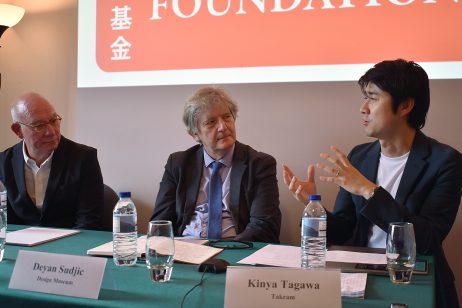
Over the past 35 years, information has become increasingly digitalised, and this has also transformed the realm of design. In the digital era, design plays a crucial role in creating a more resilient, resourceful and sustainable society. Businesses across all industries rely on design and branding to improve their operations and respond to changes in culture, society and markets, while institutions frequently use design to express their cultural and historical values. This seminar explored the role of design and innovation and its impact on society.

Fully bookedMore info
Toggle navigation