Events category: Webinar

9 September 2020

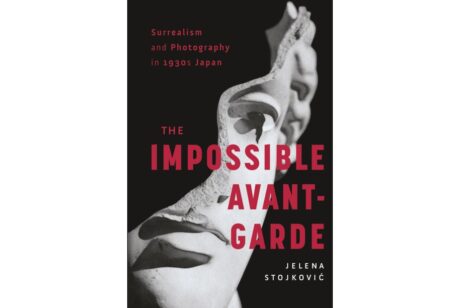
Surrealism and Photography in 1930s Japan: The Impossible Avant-Garde

A number of photographers across Japan produced a versatile body of Surrealist work during the 1930s. In this pioneering study of their practice, ‘Surrealism and Photography in 1930s Japan: The Impossible Avant-Garde’, Dr Jelena Stojković draws on primary sources and extensive archival research in order to map out art historical and critical contexts relevant to the apprehension of this rich photographic output, most of which is previously unseen outside of its country of origin. In this book launch, the author was joined in discussion of the book’s themes by Dr Luke Gartlan and Dr Tessel Bauduin. Discounted copies of the book were available to attendees.

Fully bookedMore info
31 July 2020

Reimagining War

August will mark 75 years since the surrender of Japan at the end of the Asia-Pacific War, yet the vast scope of the conflict and the distance in time from the present day can make it conceptually hard to grasp. For the youth of today who have had no experience of war, this conflict is fading from memory and comprehension. In this webinar two prominent young photographers, Kazuma Obara and Miyuki Okuyama, discussed the intersection of the war, as history, with the future, along with some of their recent works of art.

Fully bookedMore info

6 August 2020

75 years on: A survivor of the Hiroshima nuclear bomb

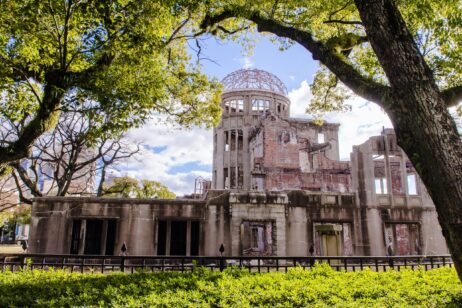
The 6th of August 2020 marked 75 years since the atomic bomb attack on Hiroshima. There are few remaining survivors of the nuclear bomb, and their voices are at risk of being lost. In this talk on the 75th anniversary of the world’s first nuclear attack, Mr Michimasa Hirata, one of the survivors of the nuclear bomb, described what happened to the city, along with his memories, and the lessons he feels we need to learn for the present and future.

Fully bookedMore info

30 July 2020

Japan's Regional Role: How Tokyo is Pressing its Interests in Asia

China’s growing assertiveness in Asia is drawing plenty of global attention. But what of Japan’s response? Still the world’s third-largest economy, Japan has long been a significant source of investment into Asian countries, and a key ally for Western powers like the US. Together with two experts and the Asia Matters podcast, this event analysed the state of Japan’s foreign policy in Asia and beyond.

Fully bookedMore info

21 July 2020

The Digital News Media and Online Harassment

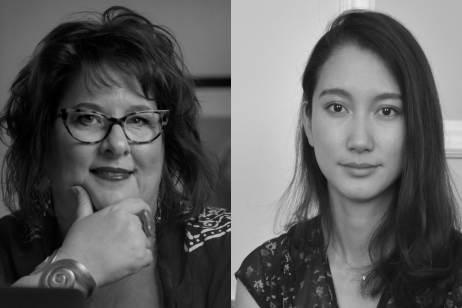
The rise of digital news has also been accompanied by an increase in disinformation, fake news, and online harassment, prompted by the anonymity offered by the internet and social media sites. In some cases, the use of social media to target and bully news organizations, individual journalists, and celebrities may even lead to fatal consequences. In this webinar Shiori Ito, an independent Japanese journalist who has been harassed online, spoke about the current situation in Japan. Dr. Julie Posetti, Global Director of Research at the International Center for Journalists, and a UN-commissioned researcher on gendered online violence against journalists, then explained the complex challenges news organisations face.

Fully bookedMore info

8 July 2020

Science Misconceptions and Myths: From Fukushima to Covid

After the 2011 Fukushima nuclear disaster, radiation fears caused huge social disturbance in Japan. To ease the prevailing trepidation, experts made dedicated efforts to provide accurate and concise scientific information. But they soon realised that the information they provided was not always readily accepted by the public. Based on their experience of Fukushima, Professor Gerry Thomas and Dr Sae Ochi will present the importance of understanding non-scientific rationality among ‘lay’ people when they look at science in the context of daily life. They will also discuss whether the lessons learned from Fukushima are applicable to the CoVID-19 pandemic.

Fully bookedMore info

25 June 2020

Working remotely with caring responsibilities

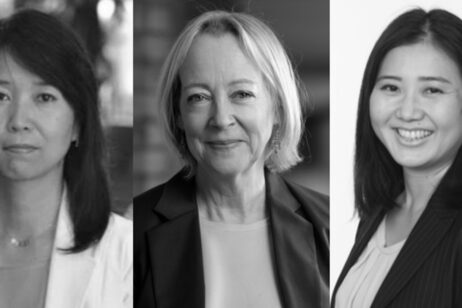
Remote work has become increasingly popular worldwide as a result of the Coronavirus pandemic, and it looks likely to play a continuing role in the ‘new normal’ once the virus has been successfully tackled. Working from home can give employees greater flexibility, time savings, and increased productivity. But it can also bring new challenges, especially for those with caring responsibilities for children, elderly relatives, or people with disabilities. In this webinar, Ms Jun Mukoyama, Ms Sayuri Daimon and Professor Lynda Gratton discussed the current situation for people in Japan and the rest of the world, through different perspectives.

Fully bookedMore info

23 June 2020

The US-Japan Security Alliance from an Okinawan Perspective

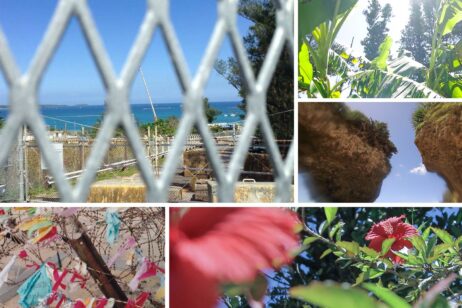
Okinawa is the keystone of the US military presence in the Pacific, but US bases on Okinawa are highly controversial with the local population, due in part to a series of sexual assaults committed against local women and children. In this webinar, Professor Emeritus Masaaki Gabe discussed the origins of the US presence in Okinawa and provided a proposal for a more sustainable Asia-Pacific security structure. Dr Ayano Ginoza took a feminist approach, with a focus on militarised sexual violence against women in Okinawa, and at the end Okinawan musician Naoko Hentona presented two recent pieces of video art.

Fully bookedMore info

10 June 2020

Transforming challenges into opportunities – Paralympian perspectives

The present coronavirus pandemic is posing challenges for people all around the world. Paralympic athletes, who were preparing to participate in the next Tokyo Paralympic games, are no exception. In this webinar, Paralympians from the UK and Japan talked about their life journey and how they have been able to transform their greatest challenges into opportunities. The athletes discussed the important role of sport and physical activities in developing mental and physical well-being, and explained some of the challenges faced by elite sportspeople at the moment.

Fully bookedMore info

21 May 2020

Creation, communication, and community: a better response to coronavirus?

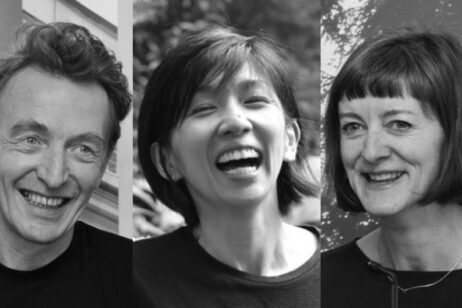
The Covid-19 pandemic has abruptly disrupted our lives and everyday routines, and attempting to stay social in the time of social distancing has created different sets of challenges and forced us to reframe our understanding of communication and community. So when, or if, we are back to our so-called ‘normal’ life, what is our new normal? What does communication mean to us now? What is our community? In this webinar, Shelagh Wright, Peter Jenkinson and Hiroko Kikuchi shared how the arts and cultural sector is dealing with the current situation, and discussed how artists are responding to it in the context of redefining communication and community.

Toggle navigation