Events category: Webinar

4 April 2024

Democracy and Human Rights in Hong Kong

In this webinar, moderated by Bill Emmott, Nathan Law discussed political developments in Hong Kong and the implications for democracy worldwide, with a focus on the 2019 anti-extradition protests, the impact of the 2020 National Security Law, and subsequent political developments. Does the NSL undermine Hong Kong’s judicial system and civil society?  Prof. Eva Pils discussed the struggle for human rights in Hong Kong, focusing on the 2020 National Security Law and impending ‘Article 23’ legislation. Prof. Kamikubo discussed how the Japanese government views the political developments unfolding in Hong Kong, and how the arrest of Chow, who had been appealing to the Japanese public in her fluent Japanese, was received in Japan.

Booking closedMore info

24 April 2024

[Webinar] Establishing Facts

We are now living in a “Post-Truth Era”. People can no longer trust information on a variety of media, especially social media, which spread a tide of disinformation. With the advent of generative AI, it is becoming even more difficult to tell what is true and what is false. Fact-checking is becoming increasingly important as democracy depends on an informed citizenry, and if we cannot agree on the basic facts, societies face a risk of collapse. In this webinar, moderated by Jack Goodman, Eliot Ward Higgins and Prof. Maiko Ichihara discussed why fact finding is important.

Booking closedMore info

1 February 2024

BBC が伝えてきたこと

英国最大の公共サービス放送BBCが視聴者にどのような番組を放送・配信し、社会の中でどのような位置づけになっているのかを国外から知るのは容易ではありません。どの国の放送局も制作したコンテンツは、原則国内でのみ視聴できるようになっているからです。BBCは時として「国営」と間違って紹介されることもありますが、視聴世帯から放送受信料を徴収して活動する「公共放送」であり、社会を構成する「みんなのもの」です。 本ウェビナーでは、小林恭子氏をお招きし、開局から約100年、BBCが伝えてきたことを辿りながら、公共放送やメディアの未来を考えました。

Fully bookedMore info

23 November 2023

Global Conflicts and Japan's Energy Security

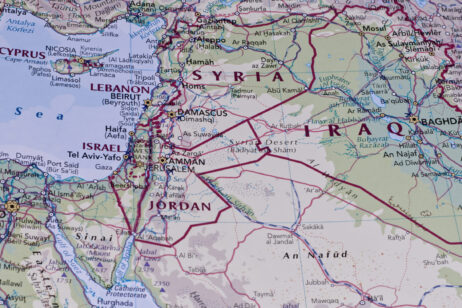
Recent global conflicts including the Russia-Ukraine and Israel-Hamas wars have had major consequences for the present international order and the energy security of many countries, including Japan. The Israel-Hamas war and its potential for escalation may impact the Middle East region and its relations with counties like Japan, putting its energy supplies at risk. In this webinar, moderated by Dan Marks, Professor Koichiro Tanaka from Keio University discussed the impact of global conflicts amid possible concerns about Japan’s energy security.

Booking closedMore info

28 November 2023

Japan's response to the Israel-Palestine conflict

The ongoing war between Israel and Hamas represents a new shock for international geopolitical relations, coming less than two years after the beginning of the Russia-Ukraine war. Hamas’s attacks and Israel’s response have generated various reactions from governments around the world. Global geopolitical divisions could widen and accelerate further as a consequence of this conflict.

In this webinar moderated by Lawrence Freedman, Japan’s former Deputy Minister for Foreign Affairs Hitoshi Tanaka discussed Japan’s perspective on and response to the Israel-Hamas conflict. He analysed the potential impact on the international order and Japan’s position in it.  Additionally, he shared his opinions about Japan’s role as this year’s G7 host and innovative diplomatic approaches that could be taken towards recent global conflicts.

Booking closedMore info

5 December 2023

Nuclear Ghost: Atomic Livelihoods in Fukushima’s Gray Zone

Nuclear Ghost takes us deep into the liminal zone of once evacuated, post-fallout Minamisōma, a town severely impacted by the 2011 nuclear disaster in Fukushima, Japan. In this talk, moderated by Dr Steger, Dr Morimoto talked about the disaster’s impact on modern Japanese society based on his fieldwork conducted between 2013 and 2019 in coastal Fukushima. More specially, he explained how natural and technological disasters and the resulting techno-sensory politics—half-life politics—of nuclear “things” impacted residents’ lives in post-fallout coastal Fukushima.

Booking closedMore info

30 November 2023

Innovation in Space

A growing number of actors have become involved in space exploration in recent years. International cooperation is key, with the ISS showing a great example of what can be achieved when space agencies from different countries cooperate. But the present geopolitical context of growing frictions between global powers is rendering continued collaboration uncertain, and may lead to more intense competition for hegemony in space in the future. In this seminar moderated by Sara Russell, Naoko Yamazaki discussed the impact of changing relationships between the major national players on prospects for future international cooperation in space exploration, and the contribution of Japan’s innovative space programme.

Booking closedMore info

26 October 2023

車いす1000台を届けて見えたウクライナの未来

ロシアのウラジーミル・プーチン大統領がウクライナに全面侵攻して間もなく600日。元産経新聞ロンドン支局長でニューズウィーク誌日本版のコラム「欧州インサイドReport」を担当する在英16年のベテラン国際ジャーナリスト、木村正人が分かりやすく状況を解説します。ただ「伝える」ことから一歩踏み出して、日本製車いす補助具を現地に届けるお手伝いをしたことをきっかけに日本の中古車いすを整備してウクライナに届けるプロジェクトも取材と同時進行で始めることに。

Booking closedMore info

24 October 2023

Japan's Population Decline and Immigration

Japan’s population decline has accelerated in recent years. In 2022, all of Japan’s 47 prefectures reported a population drop for the first time, and the overall population decline was the largest since records began in 1968. In this webinar, Menju Toshihiro talked about the multiple factors contributing to Japan’s population decline, as well as the different measures being considered to address the issue, including immigration policies. Will Japan implement policies to encourage immigration? If so, what kind of changes will be needed in Japanese society? And what other policy responses will be needed, in both the short and long term?

Booking closedMore info

9 October 2023

Japan's Gender Gap Challenges and Innovative Responses

Japan’s progress in closing its gender gap continues to lag despite government attempts in recent years to promote the economic activity of women. According to the World Economic Forum’s latest Global Gender Gap Report (for 2023), Japan ranked 125th out of 146 countries, its worst result since the report started in 2006. More specifically, women’s participation in politics is remarkably low. In this webinar, moderated by Linda Yueh, Professor Miura explained the current situation of the gender gap in Japan (including differences by Prefecture), the challenges, and some proposals for innovative policy responses.

Booking closedMore info
Toggle navigation