今までのイベント

11 October 2022

US Military Bases in Okinawa: An Activist’s Response

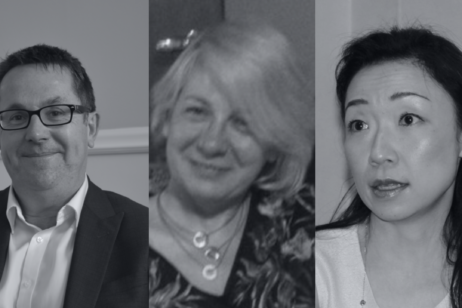
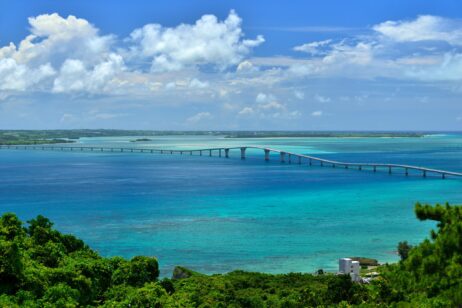
This year marks the 50th anniversary of the reversion of Okinawa from the US to Japan. But even today, Okinawa has one of the heaviest concentrations of US military bases in the world. Okinawa represents 0.6% of Japan’s land area, yet it contains about 70% of all US military bases in the country. As a result, the people of Okinawa are subject to incidents and accidents caused by US troops, noise from US military aircraft, and environmental pollution caused by the bases. In this talk moderated by Dr Ra Mason, Jinshiro Motoyama, an activist who played a leading role in the referendum, talked about his recent activities and the response to them, his current initiatives, main challenges, and hopes for the future of Okinawa.
6 October 2022

Private View: La Mer by Yuken Teruya

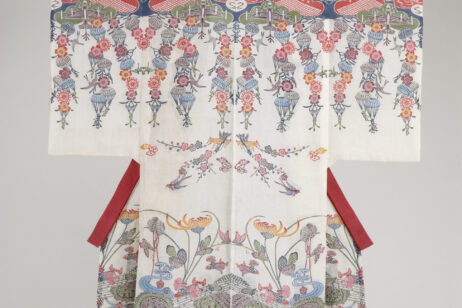
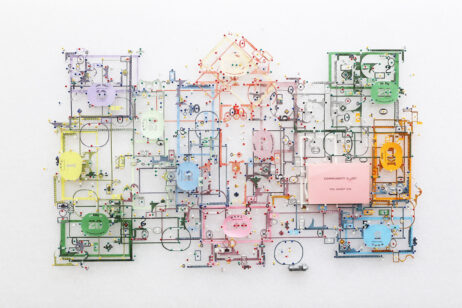
The Daiwa Anglo-Japanese Foundation is pleased to showcase Yuken Teruya’s first UK show, marking the 50th year of Okinawa’s reversion to Japan after the American occupation. Teruya is fascinated by human perceptions of the ever-changing moment. For him, the modest practice of drawing is a mighty tool not only to observe hierarchies, but to rebalance them. Teruya’s work utilises temporary, fragile materials: his cut-out pieces can be described as expanded drawings, but also as delicate sculptures. The sea is a constant presence in the Okinawan landscape and a recurring theme in Teruya’s work. The exhibition La Mer encapsulates Teruya’s perspective: historic and present references to the Okinawan condition, ecological systems within material cultures, and power relationships between countries.

20 September 2022

What next for UK-Japan cybersecurity cooperation?

In this talk Mihoko Matsubara will share information on Japan’s recent cybersecurity efforts, especially those less well-known in English-speaking countries, in order to facilitate mutual understanding and future UK-Japan cooperation. Japan will soon release an updated version of its National Security Strategy to reflect technological changes as well as heightened tensions in Europe and the Indo-Pacific region. With Japan and the UK deepening their security collaboration and sharing increasing amounts of intelligence over the last couple of years, cybersecurity will remain the linchpin of the partnership.

19 September 2022

EVENT CANCELLED - Dan Snow in conversation with Setsuko Thurlow: The Threat of Nuclear Weapons

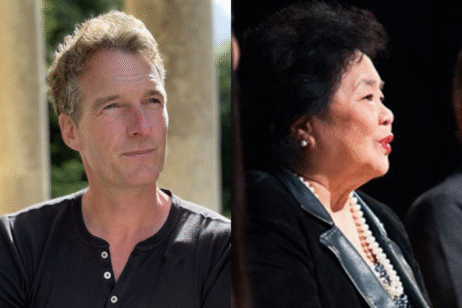
77 years ago, on August 6, 1945, the United States dropped the world’s first atomic bomb over the city of Hiroshima, killing over 140,000 people. Three days later, a second atomic bomb was dropped over the city of Nagasaki. In this webinar moderated by Dan Snow, Setsuko Thurlow, one of the survivors of the Hiroshima atomic bombing, will share her experiences of the bomb and talk about her international activity promoting nuclear disarmament. She will share her message for future generations in the present context of escalating rhetoric, and rising risks that nuclear weapons will be used again.

15 September 2022

Japan’s Effectiveness as a Geo-Economic Actor: Navigating Great-Power Competition

Geo-economic strategy has long been a key element of statecraft. In recent years, it has acquired even greater salience given the increasing willingness of both China and the United States to wield economic power in their strategic competition. While Japan’s post-war geo-economic performance often failed to match its status as one of the world’s largest economies, more recently Tokyo has demonstrated increased geo-economic agency and effectiveness. In this book, Yuka Koshino and Robert Ward draw on multiple disciplines – including economics, political economy, foreign policy and security policy – and interviews with key policymakers to examine Japan’s geo-economic power.

Fully bookedMore info

14 September 2022

From Hiroshima and Minamata to today Socially engaged practices in post-war Japan

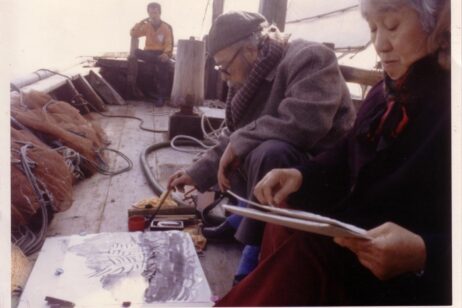
In this talk, Dr Justin Jesty and Namiko Kunimoto will discuss how artists like Iri Maruki and Toshiko Akamatsu and Noriaki Tsuchimoto engaged critically with the realities of post-war Japan and what their works do for us in the present. They acknowledged public fears, vulnerabilities and anxieties about people’s bodies being contaminated by invisible threats, and tried to keep the public focussed on the issues they addressed. This talk will be an occasion for us to consider the work of those artists and connect it to contemporary issues.

Fully bookedMore info

13 September 2022

Making the invisible visible (and vice versa) in the “atomic situation”

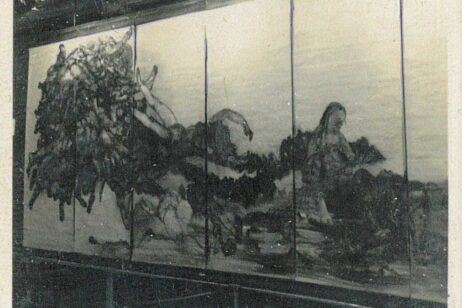
When the Maruki Gallery opened in 1967, it was initially home to the murals known as the Hiroshima Panels (Genbaku no Zu), painted by the artists Maruki Iri and Maruki Toshi. They created 15 works in total between 1950 and 1982, of which the first seven directly depicted the victims of the atomic bomb dropped on Hiroshima. In this talk, Professor Steffi Richter from the University of Leipzig will look at the gallery as a place of communication about the “atomic situation” and Hiroshima as not (simply) a city, but a “state of the world” (Günther Anders).

Fully bookedMore info

20 July 2022

ウクライナ侵攻をめぐる空前の「情報戦」

ロシアのウクライナ侵攻をめぐる特徴の一つに、激しい「情報戦」があります。特に印象的なのはウクライナや英国、米国の諜報機関、民間情報機関による秘密情報の積極的な開示でしょう。ロシアの虚偽情報に対抗して「事実」を明らかにし、軍事行動の機先を制することを目的としています。英国の情報機関のある幹部は「真実の周知を確かなものとするため」に、通常は明かされることのない秘匿性の高い情報を戦略的に公開していることを明らかにしています。その迅速さと規模は前例がありません。

19 July 2022

Private View: HIROSHIMA by Iri Maruki and Toshiko Akamatsu

From 1950 to 1982 Iri Maruki and Toshiko Akamatsu (also known as Toshi Maruki) created the Genbaku no Zu series of artworks, internationally known as the Hiroshima Panels. The works became an apparatus to convey the story of the atomic bombing of Hiroshima and Nagasaki to the general public, first during a period of censorship, then during protests against nuclear weapons by the artists and their supporters. Amidst a mood of fear and anger towards the Cold War, almost 20 countries invited the works to be exhibited in a gesture of peace and transnational solidarity. As we potentially enter an era of escalating nuclear rhetoric, the Daiwa Anglo-Japanese Foundation showcases the panels’ drawings and exhibition archives in an opportunity to reflect on the consequences of nuclear warfare.

13 July 2022

Challenges and Opportunities in Refugee Protection: Lessons from Afghanistan to Ukraine

Reflecting the current international situation, in this webinar, the speakers from the UK and Japan discussed the UK’s and Japan’s current refugee policies, and the present situation and future outlook in both countries, similarities and differences in the treatment of Afghani nationals last year and those displaced from Ukraine this year, and how the UK and Japan can work better together to overcome the current difficulties and contribute to a stronger international refugee protection mechanism in the world.

8 July 2022

Queer activist Kan on marriage equality in Japan

In this talk, Kan discussed the difficulties he had attending a Japanese school where heterosexuality and gender categories were taken for granted, his struggles with his own sexuality and his coming out to his Japanese family and friends, his decision to study overseas in search of a more inclusive environment, and his move to the UK in 2021, given Japan’s continued non-recognition of marriages with same-sex partners. He also discussed Japan’s social and legal environment as it relates to sexual minorities, and what Japan can do to create a more liveable environment for them.

Toggle navigation