今までのイベント

1 February 2022

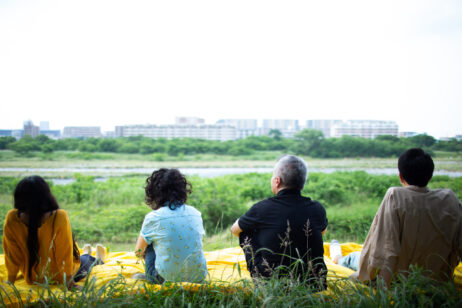
Supporting older people in the community in England and Japan

Demographic ageing is forcing many developed countries to abandon generous public welfare services. But this change does not mean giving up on welfare provision and adopting libertarian policies that leave almost everything to self-help. Many countries are making more positive use of welfare provision by residents and charitable organisations to support the lives of older people in the community. Looking at the cases of England and Japan in this seminar, Dr Daisuke Watanabe introduced the background, current situation, and challenges for contemporary pluralistic welfare services for older people. He also discussed the costs and other burdens of community-based mutual aid activities, and their sustainability.
25 January 2022

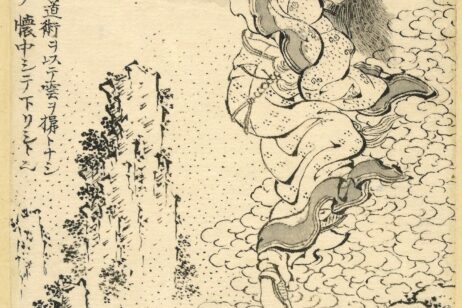
Hokusai: What makes him so popular?

In this webinar, Alfred Haft, a curator at The British Museum, considered the reasons for Hokusai’s popularity in connection with the Museum’s rediscovery of a group of more than 100 rare Hokusai drawings, and their display in the Museum’s current exhibition, Hokusai—The Great Picture Book of Everything.  Tane Tsuyoshi, a Paris-based Japanese architect, talked about the Hokusai exhibitions he has curated in Paris and Tokyo, creatively deploying a combination of immersive installations and digital art. We hoped to shed new light on Hokusai’s multifarious talent.

Fully bookedMore info

20 January 2022

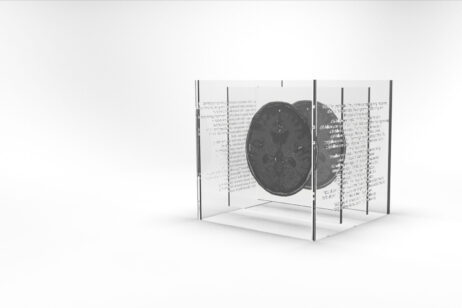
Fluctuating Fluctuations: now=then here=elsewhere

The Daiwa Anglo-Japanese Foundation is proud to present the first solo exhibition of award-winning artist Yukako Tanaka, who currently lives and works in London. Tanaka’s practice spans a range of media from video and sound installations to the use of the latest viewing technologies including holographic visualisation and tactile 3D modeling. These modes of creation culminate in a fusion of art, science and philosophy where her art is positioned as a potential vessel that contains and informs disciplinary processes and their varying approaches to knowledge production.

18 January 2022

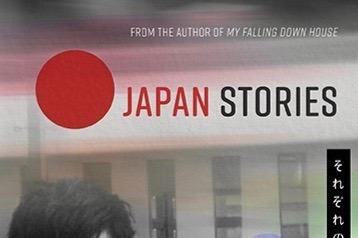
Japan Stories

Japan Stories is an absolutely spellbinding collection of short fiction and poetry. Meet the sinister museum curator, a son caring for his dementia- struck father, a young woman who returns to haunt her killer, and a curious homeless man intent on cleaning your home with lemons. This captivating work also includes Joso’s stories, ‘I’m not David Bowie’ and ‘Maru-chan’ an homage to Yayoi Kusama. The book is illustrated by Manga artist, NAMIKO. At this book launch, Joso introduced Japan Stories, discussing the inspirations behind it. She also read from the book and took questions from the audience. 

Fully bookedMore info

1 January 2022

Solidarity

The war in Ukraine has now been going on for nearly three months, and there is still no sign that it is approaching an end any time soon. At the same time, we still need to solve the problems associated with refugee, migration, inequality, food security and climate change. Seeing this year as a major turning point, our annual seminar series will focus on the topic of “Solidarity” in its different forms. Our events will aim to reflect on how solidarity can be strengthened to overcome the current difficulties and contribute to a better society for the future.

14 December 2021

Domestic AI in the UK and in Japan

Workplace digitalisation and automation have attracted substantial academic and policy attention in recent years. In contrast, the digitalisation of households and the rising automation of housework and care work has received limited attention. The value of unpaid domestic labour is not included in GDP or other national income accounting indicators, making it largely invisible. Yet unpaid work is important, with housework and care work making an important contribution to total welfare and economic output. Domestic digitalisation and automation may have evaded scholarly attention, but these trends have not evaded consumers.  With the rise of digitalisation and predictive automation, our homes are currently undergoing a major transformation. In this webinar we explored the implications for households in Japan and the UK. 

6 December 2021

Astronauts as the Origin of Space Society

Space exploration is becoming more accessible than ever, and an increasing number of people are expected to travel to space in the near future. The idea of humans travelling to and living in space is certainly fascinating, but how is it likely to develop from here? In this seminar, we looked at human forays into space in the past, present and future. Our special guest, astronaut Naoko Yamazaki, talked about her motivations in becoming an astronaut and her experiences of travelling and living in space. She also shared her thoughts about how space travel and living might change in the future.

3 December 2021

Gene Technology and Climate Change

Gene technology has enormous potential to bolster our response to climate change. In this webinar, two experts will present on the use of innovative genetic technologies in both animals and plants to address climate change challenges and mitigate some of the consequences for humanity. Professor Kentaro Shimizu talked about his study of wheat in the framework of the 10+ genome international consortium aiming to contribute to “the second green revolution”. Professor George Church then explained how gene technology could be used to bring back long-extinct species, presenting his fascinating project of reviving and restoring the woolly mammoth.

2 December 2021

Between Man and Machine

The quest for artificial life (ALIFE) has prompted researchers to reconsider their understanding of the nature of life. Professor Ikegami has developed various types of ALIFE systems and has been thinking about the differences between humans and machines (or “what humans and machines have in common”). Advanced technologies and cities are inevitably becoming life-like. Ikegami believes that we have now progressed from the age of AI into the age of ALIFE. In this seminar, Professor Ikegami introduced his current work (some of which is art-related)  and discussed some interesting issues surrounding artificial life. He discussed what it is about life that is lacking in today’s robots, and what lies between man and machine.

29 November 2021

Japanese Poetry: Beyond the Haiku

The popularity of haiku around the world has meant that the form has become almost synonymous with Japanese poetry as a whole. Yet there is a great wealth of Japanese poetry other than haiku which deserves attention. In this webinar, three speakers will look at Japanese poetry beyond haiku, from the first written Japanese texts in the early 8th century up to contemporary times. Professor Sonja Arntzen introduced examples from the early period; Dr Alan Cummings then discussed early-modern poetry; and the poet Yasuhiro Yotsumoto showcased the development of colloquial free verse in modern and contemporary Japan.

25 November 2021

AUKUS and its geopolitical implications for Asia

The trilateral defence agreement AUKUS represents a significant new strategic development for the Indo-Pacific, with implications for regional and global security. This security pact is seen as a military alliance to counter China’s assertiveness, has angered France and caused increased uncertainty about future relations between the US and the EU, and prompted concerns among ASEAN countries about their roles in a possible US-China conflict. What are the implications of AUKUS for the geopolitical landscape in Asia and what is Japan’s perspective on this agreement? In this seminar chaired by Vincent Ni, the panellists discussed the implications of AUKUS and its geopolitical dynamics in Asia.

23 November 2021

Koki Tanaka in conversation with Sally Tallant

In this talk, Tanaka reflected on his artistic practices, about living together, filming and acting, community and performativity, and his approaches to history over the years. It also included his experience of being forced by the COVID-19 pandemic to reconsider his method of bringing people together. The discussion was moderated by Sally Tallant, President and Executive Director at the Queens Museum in New York, who is currently leading a programme, ‘Year of Uncertainty,’ that brings artists, community partners, and co-thinkers together with the team to reimagine the museum. Along with Tanaka’s newly published book “Reflective Notes (Recent Writings),” this talk gave us hints to help rethink how to live together during and after the pandemic.

Toggle navigation