Events category: Talk

24 September 2024

Metalworker Kathleen Reilly's design journey: From Glasgow to Tsubame-Sanjo and beyond

Scottish artist and metalworker Kathleen Reilly discussed her journey from her hometown of Glasgow to the small metalworking town of Tsubame-Sanjo and her inspiration and experiences living and training there for two years. Kathleen’s new knife design Oku will be on show as part of this year’s London Design Festival 2024. She discussed Oku in-depth, including her collaboration with Karimoku Furniture, Japan’s leading wooden furniture manufacturer and the background behind her installation and film created with Riyo Nemeth and Paz Castro featuring music by soundscape designer Hiroki Saitoh to celebrate the fusion of Eastern and Western cultures. She also touched on her new metal casting project series ‘Gran’s Plates’ and ‘Mother’s Plates’.

17 October 2024

Squingle: VR Game Business and Japanese Studio Collaboration

The journey of developing and publishing Squingle, a psychedelic VR puzzle game where players guide revolving orbs through increasingly complex 3D spatial mazes on a cosmic transcendence adventure, has been a significant success story enabled by the Daiwa Scholarship. Squingle merges science, technology, innovation, and art to create a surreal, ongoing collaboration between the UK and Japan, deeply influenced by partnerships with Keio University and Enhance Games, a Japanese game studio.

9 September 2024

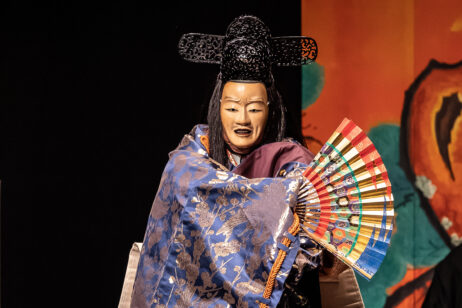
West meets East through the World of Noh

Akira Matsui, Kitazawa Hideta and Richard Emmert have been at the forefront of bringing noh theatre to the world through innovation and experimentation. The three Masters will join Jason James in conversation to hear about how tradition meets modernity, and West meets East, in the work of these singular figures in the noh world. At the end of this discussion Kitazawa Hideta will undertake a book signing of his newly published book Noh and Kyogen Masks: Tradition and Modernity in the Art of Kitazawa Hideta.

Fully bookedMore info

16 July 2024

Social determinants of youth mental health in Tokyo & London

While Japan leads the world in terms of physical health outcomes, its mental health systems are often seen as ‘behind the curve’ compared to other economically-developed countries. This is especially true for mental health and wellbeing of children and young people. In this event, we welcomed a panel of speakers with extensive experience working in mental health policy and practice in Japan to present on contemporary issues and intervention strategies relating to young people’s mental health.

25 June 2024

Keiichi Kurosawa and Early Music in Japan

Keiichi Kurosawa (1903-82) studied in the 1920s at Trinity College, Cambridge. He was always destined to take over his father’s typewriter company in Tokyo, but he was also a talented musician. During the time he spent in the UK there was a resurgence in interest in early music, led by figures such as Arnold Dolmetsch, who founded the International Dolmetsch Early Music Festival at Haslemere in 1925. Kurosawa became particularly interested in madrigals because of their essentially amateur music-making ethos, and founded the Tokyo Madrigal Club in 1929. Jason James will discuss Kurosawa’s time at Cambridge, and how he and his musical associates played a key role in introducing (Western) ‘early music’ to Japan in the mid-20th century.

30 April 2024

Rakugo & Kōdan:
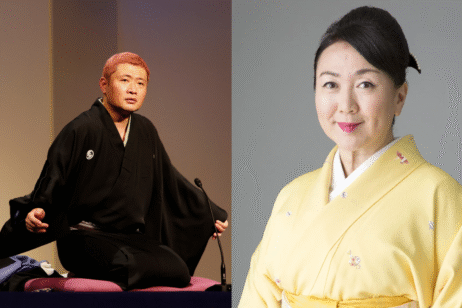
The Art of Japanese Solo Storytelling

Join rakugo master Tatekawa Shinoharu and kōdan master Kanda Yōko for a unique event that showcases the fascinating world of Japanese storytelling. With roots in early modern times and enjoying increasing popularity in contemporary Japan, both rakugo and kōdan feature a single storyteller creating a kaleidoscopic world of emotions through words and body language. After a brief introduction to rakugo by Prof Laura Moretti (University of Cambridge) and to kōdan by Prof Motoi Katsumata (Meisei University), both delivered in English, the two performers will gift us with short snippets of their art.

Fully bookedMore info

15 March 2024

Effect of political reforms on more proactive Japanese external policies

How have political reforms since the 1990s changed Japanese foreign and security policies? In this talk Satoshi Machidori and Harukata Takenaka examine the effects of a series of institutional reforms since 1990 on Japanese foreign and security policy. The first presentation demonstrates that political reform was a reaction to major changes in the international environment in the early 1990s, particularly the end of the Cold War and the bitter experience of the Gulf War. The second presentation closely examines the relationship between Japan’s reformed political institutions and the formation of the Free and Open Indo-Pacific Strategy.

8 February 2024

Miyazaki Tōten and the Making of ‘Naniwabushi’ as a Mode of Popular Dissent in Early 20th Century Japan

In this talk, Joel uncovered how Miyazaki Tōten (1870–1922), a revolutionary and thinker who became a naniwabushi balladeer, was instrumental in the rise of naniwabushi as a popular art form during the Russo-Japanese transwar period (1902–1909) and used it to engage in a practice of nihilist democracy. He used a transwar frame to examine how Miyazaki Tōten created ‘new’ naniwabushi to deliberately link the techniques and rhetoric of the Freedom and People’s Rights Movement from the 1880s to the Russo-Japanese War (1904–1905).

27 February 2024

Politics and Religion in Britain and Japan

In apparent contradiction to the phenomenon of globalisation, traditional religious affiliations are experiencing a resurgence, notably in alignment with populist nationalism. Although, on the surface, Britain and Japan may not exhibit a comparable surge of religious influence within the context of populist politics, there are discernible underlying currents in both nations. During this presentation, Professors Walters and Kato discussed and analysed the role of religion in both Britain and Japan, with a particular focus on the impact of globalisation and populist nationalism.

Fully bookedMore info

23 February 2024

Kimigayo and the Meiji Musical Aesthetic

Daiwa alumnus Simon Cosgrove guided us through the fascinating story of Kimigayo, one of the world’s most enigmatic national anthems, an 11-bar composition written in an ancient Japanese mode with no final cadence. We discovered how a British military bandmaster was the catalyst for Japan’s first national anthem, and how the music of Kimigayo was shaped by the cultural and social changes of the Meiji Period. Kimigayo was be presented as a key to unlocking the Meiji musical aesthetic, and its influence on later national anthems around the world was examined.

Toggle navigation