Events category: Talk

23 May 2023

The Role of Olympics Volunteers – Charles Nishikawa in conversation with Noel Thatcher MBE

With the Paris Olympics 2024 approaching, around 45,000 volunteers are expected to be hired to support the organisation of the games. The role of volunteers is not only critical to the success of the Games, but also has a great social impact in strengthening and promoting volunteering infrastructure. In this event, moderated by Noel Thatcher MBE, Charles Nishikawa spoke about the role of volunteers in the Olympics. Mr Nishikawa has over 10 years of experience participating as a volunteer in past Olympic Games. He shared his perspectives on the differences between the UK and Japan regarding the collective experience, motivation, and social impact of volunteers.

9 February 2023

Japan’s Economic Security and the Global Competition in Semiconductors

The semiconductor industry – vital for the development of future technologies – is at the centre of rising geopolitical competition between the US and China. Chip production is highly concentrated in East Asia, especially in Taiwan. As China develops its domestic semiconductor industry and geopolitical divides deepen, many countries, including Japan, are attempting to rebuild their semiconductor industry and related supply chains. In this talk, Mariko Togashi explained Japan’s position in the global competition for semiconductors and how it impacts the country’s national economic security strategy. She also discussed some of the greatest challenges lying ahead for Japan’s semiconductor industry and national security, and present recommendations.

26 April 2023

Pictorialist Photography: Soichi Sunami and his Issei Contemporaries

David F. Martin discussed the work and international achievements of Issei photographers active in Seattle, Washington, in the early 20th century. He will focus primarily on Soichi Sunami, whose main interest was dance photography, and became the chief photographer for the Museum of Modern Art (New York). The Seattle Camera Club was founded in 1924 and held their first exhibition the following year. The key members were Hiromu Kira, Dr. Kyo Koike, Frank Asakichi Kunishige, and Yukio Morinaga. With the exception of Sunami, the Seattle Issei photographers were interned at the Minidoka relocation centre (concentration camp) which collectively ended their artistic careers.

Fully bookedMore info

17 January 2023

A British business success in Japan: Wilkinson Tansan Mineral Water

John Clifford Wilkinson left Leeds in 1872, at the age of 20, to work for the trading company Hunter and Co. in Kobe. In 1889, he was hunting in the Takarazuka area when he stumbled on a place where naturally-carbonated mineral water bubbled out of the ground. This was the start of Wilkinson Tansan Mineral Water and its various spin-offs, which eventually grew into one of the largest beverage companies in Japan. Jason visited Takarazuka to find out more, and was impressed to see the water still bubbling up just where Wilkinson first found it. Sadly, not much else tangible remains. Jason retraced the fascinating story of the Wilkinson family business in Japan.

1 November 2022

Symbols of Esteem: Courtly Gifts in the British Royal Collection

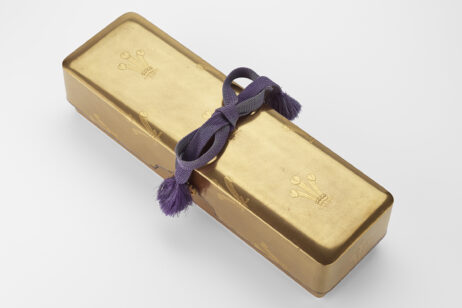
The royal and imperial families of Britain and Japan have enjoyed a dynamic relationship for over four centuries. Exchanging diplomatic gifts has been central to this interaction, and many of the works of art presented are replete with symbolism. From the 16-petalled imperial chrysanthemum, to cranes, phoenixes and the ‘three-friends-of-winter’ motif, emblems have been carefully selected to express political and personal friendship. This lecture explored how courtly gift-giving drew on ancient symbols to forge new cultural links. It examined the role of the Japanese landscape, East Asian mythology and European heraldry in giving visual form to courtly goodwill.

11 October 2022

US Military Bases in Okinawa: An Activist’s Response

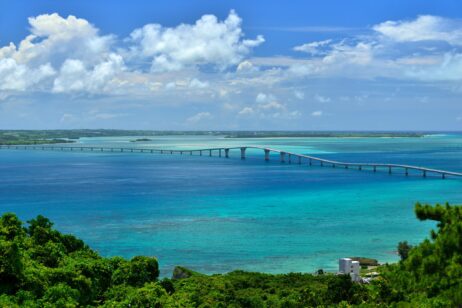
This year marks the 50th anniversary of the reversion of Okinawa from the US to Japan. But even today, Okinawa has one of the heaviest concentrations of US military bases in the world. Okinawa represents 0.6% of Japan’s land area, yet it contains about 70% of all US military bases in the country. As a result, the people of Okinawa are subject to incidents and accidents caused by US troops, noise from US military aircraft, and environmental pollution caused by the bases. In this talk moderated by Dr Ra Mason, Jinshiro Motoyama, an activist who played a leading role in the referendum, talked about his recent activities and the response to them, his current initiatives, main challenges, and hopes for the future of Okinawa.

20 September 2022

What next for UK-Japan cybersecurity cooperation?

In this talk Mihoko Matsubara will share information on Japan’s recent cybersecurity efforts, especially those less well-known in English-speaking countries, in order to facilitate mutual understanding and future UK-Japan cooperation. Japan will soon release an updated version of its National Security Strategy to reflect technological changes as well as heightened tensions in Europe and the Indo-Pacific region. With Japan and the UK deepening their security collaboration and sharing increasing amounts of intelligence over the last couple of years, cybersecurity will remain the linchpin of the partnership.

13 September 2022

Making the invisible visible (and vice versa) in the “atomic situation”

When the Maruki Gallery opened in 1967, it was initially home to the murals known as the Hiroshima Panels (Genbaku no Zu), painted by the artists Maruki Iri and Maruki Toshi. They created 15 works in total between 1950 and 1982, of which the first seven directly depicted the victims of the atomic bomb dropped on Hiroshima. In this talk, Professor Steffi Richter from the University of Leipzig will look at the gallery as a place of communication about the “atomic situation” and Hiroshima as not (simply) a city, but a “state of the world” (Günther Anders).

Fully bookedMore info

8 July 2022

Queer activist Kan on marriage equality in Japan

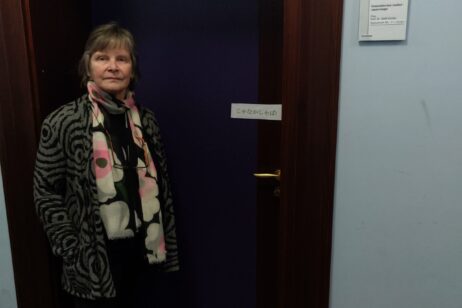
In this talk, Kan discussed the difficulties he had attending a Japanese school where heterosexuality and gender categories were taken for granted, his struggles with his own sexuality and his coming out to his Japanese family and friends, his decision to study overseas in search of a more inclusive environment, and his move to the UK in 2021, given Japan’s continued non-recognition of marriages with same-sex partners. He also discussed Japan’s social and legal environment as it relates to sexual minorities, and what Japan can do to create a more liveable environment for them.

11 May 2022

Hand and Eye: Graham Ellard and Stephen Johnstone present their short film 'Pattern' and discuss the hand-made in the work of Asako Shiroki.

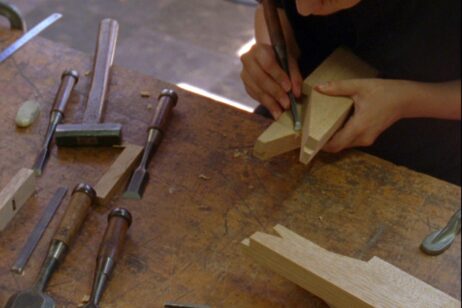
As a parallel to Asako Shiroki’s exhibition in the gallery, Graham Ellard and Stephen Johnstone presented their film ‘Pattern’, which features Shiroki at work. Ellard and Johnstone discussed their film through its overlaps and echoes with Shiroki’s exhibition; their shared interest in the hand, material processes, craft, making, and the particular form of experience generated in close and intent attention to detail – as well as how these projects have been imprinted by the extraordinary circumstances of the pandemic.

Toggle navigation