Events category: Talk

8 February 2024

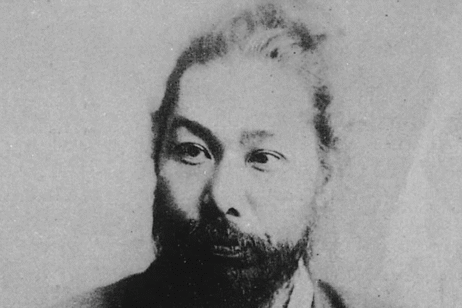
Miyazaki Tōten and the Making of ‘Naniwabushi’ as a Mode of Popular Dissent in Early 20th Century Japan

In this talk, Joel uncovered how Miyazaki Tōten (1870–1922), a revolutionary and thinker who became a naniwabushi balladeer, was instrumental in the rise of naniwabushi as a popular art form during the Russo-Japanese transwar period (1902–1909) and used it to engage in a practice of nihilist democracy. He used a transwar frame to examine how Miyazaki Tōten created ‘new’ naniwabushi to deliberately link the techniques and rhetoric of the Freedom and People’s Rights Movement from the 1880s to the Russo-Japanese War (1904–1905).
27 February 2024

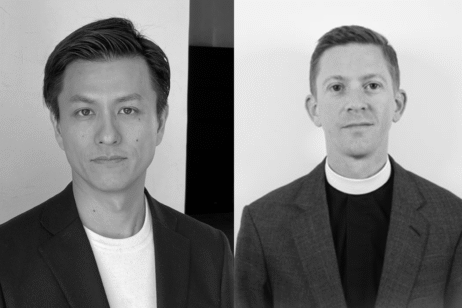
Politics and Religion in Britain and Japan

In apparent contradiction to the phenomenon of globalisation, traditional religious affiliations are experiencing a resurgence, notably in alignment with populist nationalism. Although, on the surface, Britain and Japan may not exhibit a comparable surge of religious influence within the context of populist politics, there are discernible underlying currents in both nations. During this presentation, Professors Walters and Kato discussed and analysed the role of religion in both Britain and Japan, with a particular focus on the impact of globalisation and populist nationalism.

Fully bookedMore info

23 February 2024

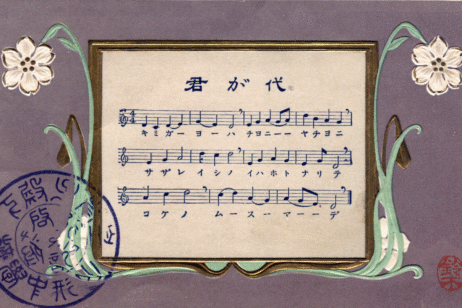
Kimigayo and the Meiji Musical Aesthetic

Daiwa alumnus Simon Cosgrove guided us through the fascinating story of Kimigayo, one of the world’s most enigmatic national anthems, an 11-bar composition written in an ancient Japanese mode with no final cadence. We discovered how a British military bandmaster was the catalyst for Japan’s first national anthem, and how the music of Kimigayo was shaped by the cultural and social changes of the Meiji Period. Kimigayo was be presented as a key to unlocking the Meiji musical aesthetic, and its influence on later national anthems around the world was examined.

25 April 2024

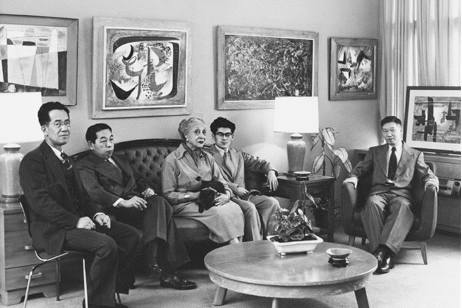
Japanese Modernist Painters in Seattle, 1910-1970

In this talk, David F. Martin discussed the art of Japanese-American painters active in Seattle, Washington in the early to mid- 20th century. Beginning with the first generation Issei to the next generation of Nisei, several of these artists achieved national and international reputations during their lives. However, their careers and personal lives suffered from being interned in incarceration camps on the American west coast during WWII. Martin featured a wide range of styles practised by these artists from impressionism to modernism and abstraction. He will present rare images of paintings completed by some of the artists during their incarceration.

Fully bookedMore info

3 November 2023

Introduction to the Tea Ceremony and Japanese Confectionery (Wagashi)

Japanese confectionery or wagashi, also known as ‘the art you taste with your five senses’, has a long history in Japan, and is closely associated with the traditional tea ceremony. Yasuhiro Hikiami, the 4th generation proprietor of Toyama Prefecture’s famous confectionery producer Hikiami Kōgetsudō, with his superb technical ability, and the creativity that enables him to come up with unexpected and beautiful designs, is a wagashi craftsman widely trusted by tea ceremony practitioners across Japan. His talk and demonstration of wagashi-making will shed light on how these sweets are made, and the thinking that lies behind them.

Fully bookedMore info

5 October 2023

Sport of Kings: Horse racing in the UK and Japan

Horse racing is a beloved sport and industry in both the UK and Japan, involving entertainment, gambling, and highly-selective breeding, among other aspects. While both countries share a passion for racing, there are distinct differences that set their horseracing scenes apart. In this talk, Dr Kanichi Kusano discussed the history of the horse racing industry up to the present day, drawing a comparison between British “traditional” racing and Japanese “fans and breeding-centric” racing. He also touched on the challenging issues that racing is currently confronting, offering insights from veterinary perspective.

7 September 2023

The Future of Dance - Crossing Social Borders

Yoriko Maeno is a Japanese dance theatre director and choreographer. Over the past 15 years, Maeno has crossed and blurred the boundaries between dance and other art media, dance and society, and the local and global. In this talk, Maeno introduces her two most recent projects related to local communities, about the culture of the Ama (“sea women”) in Japan, and her series of projects about dementia (2019-2021). Maeno shared her thoughts about the potential ecosystem for dance theatre, and further possibilities for it to tackle current issues facing humanity globally, such as divisions in society and the use of AI.

24 July 2023

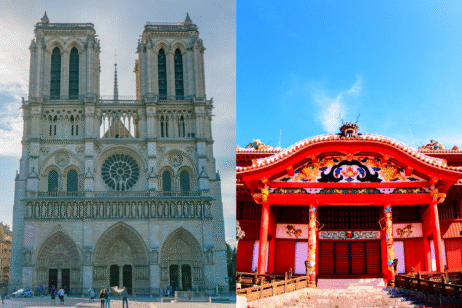
Cultural Heritage and Conservation – Notre-Dame Cathedral and Shuri-jo Castle

On April 15th 2019, Notre-Dame Cathedral in Paris caught fire. About six months later, the Seiden (State Hall) of Shuri-jo Castle in Okinawa, Japan, which was a symbol of the Ryukyu kingdom, was completely destroyed by fire. The two buildings were very different in terms of legal status, cultural value, history, materials, and governance. On the other hand, there are quite a few similarities, such as strong social reactions, the role of scientific studies, and the importance of intangible cultural heritage. In this talk, Professor Kono considered the two cases from various angles and offer some thoughts on the recovery of cultural heritage after disasters of this kind.

5 July 2023

Finding a sense of self amid European culture

Contemporary artist Maki Umehara works on producing artist books in German and other languages, and on projects with artists from various countries. In the collaborative projects [nüans] Umehara worked on in Europe, she focused on avoiding the clashes of binary oppositions such as Europe/Asia, male/female, conservative/liberal. The archival book she created through her projects examines how society depicts itself as a place for learning, like a school, with the underlining themes of “place for self-education” and “network”. In this talk Umehara showed how the smallest collective unit comprising society has transitioned over time and how she has started to create her own space away from all that. She talked about how she has found and improved her sense of self amid European culture.

25 May 2023

Evolving Priorities in International Development for Japan and the UK

Priorities in international development are evolving rapidly with humanitarian issues, climate change and security issues inter alia becoming much more important. What is the view from Japan and the UK on these priorities? Also, the UK is ever more budget constrained with an arguably receding profile in international development, while Japan is increasingly proactive, and expected to spend more on ODA. In practical terms, how will these evolving priorities, and changes in expenditure and proactivity, affect how the UK and Japan deliver Official Development Assistance (ODA)? Are there opportunities for coordinating and collaborating in the area of ODA? In this seminar Dr Carl Aaron and Professor Kuniaki Amatsu analysed these issues from a Japanese, UK and international perspective.

Toggle navigation